The Sun stands as the central point in astrology and shapes how a person experiences life. It reflects vitality, conscious identity, confidence, and the drive to express individuality through action and choice.
In a birth chart, the Sun marks the core self and the direction personal energy tends to follow. Its zodiac sign describes style of expression, while house placement highlights life areas where a person seeks recognition and purpose.
Understanding the Sun’s position helps explain motivation, ambition, and long-term goals. It also clarifies how someone builds self-worth, develops leadership traits, and maintains inner stability across different stages of life.
What the Sun Represents in Astrology
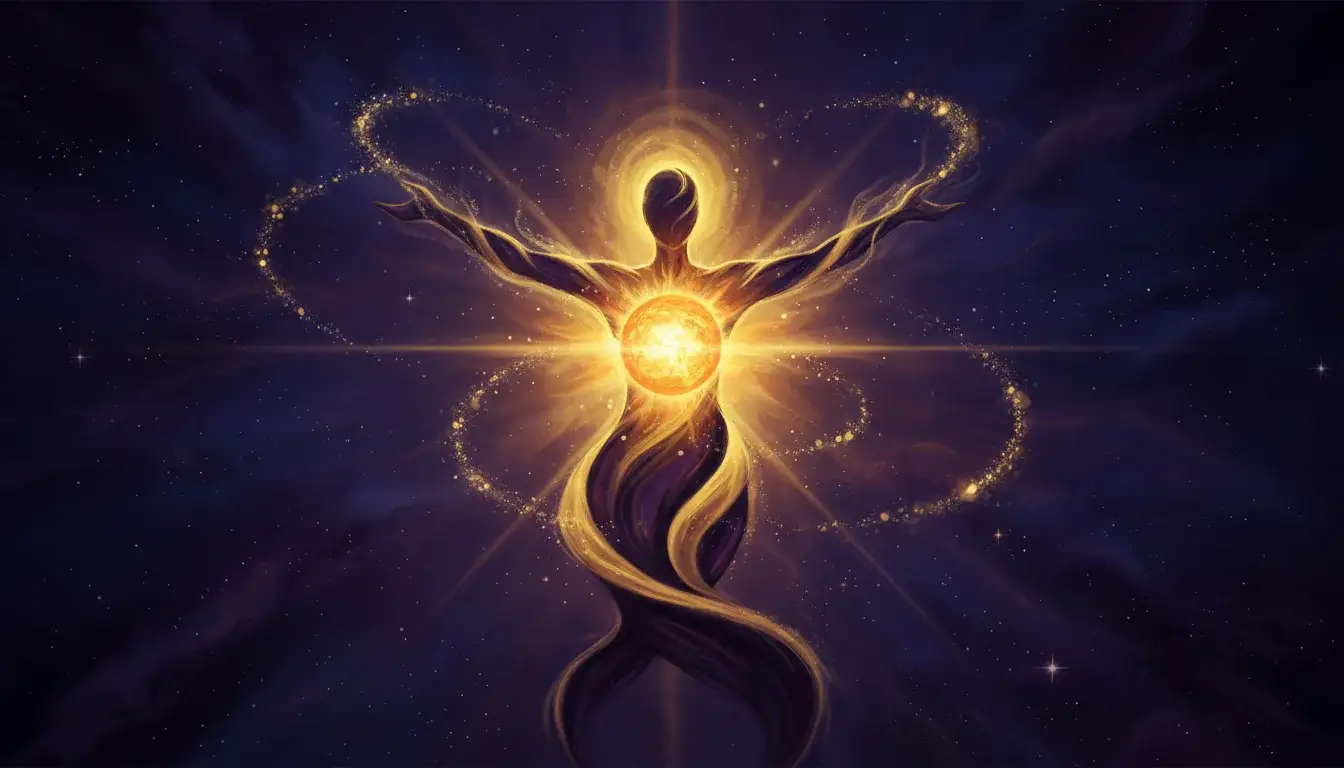
The Sun reflects the core self in astrology. It defines the part of a person that expresses confidence, creativity, and conscious will. This placement helps explain how someone leads, builds identity, and channels inner strength throughout life.
Key roles of the Sun include:
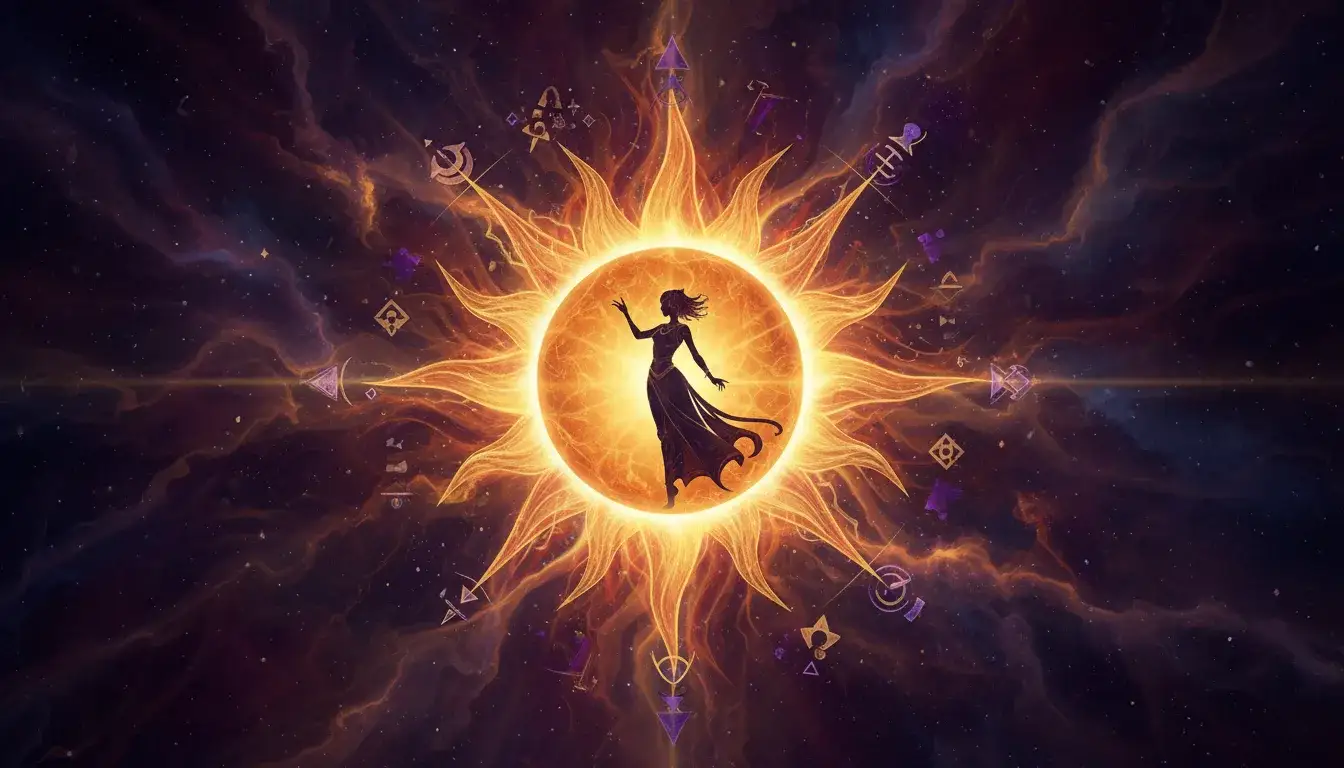
Representing ego, personal style, and self-expression

Shaping ambition, drive, and long-term direction
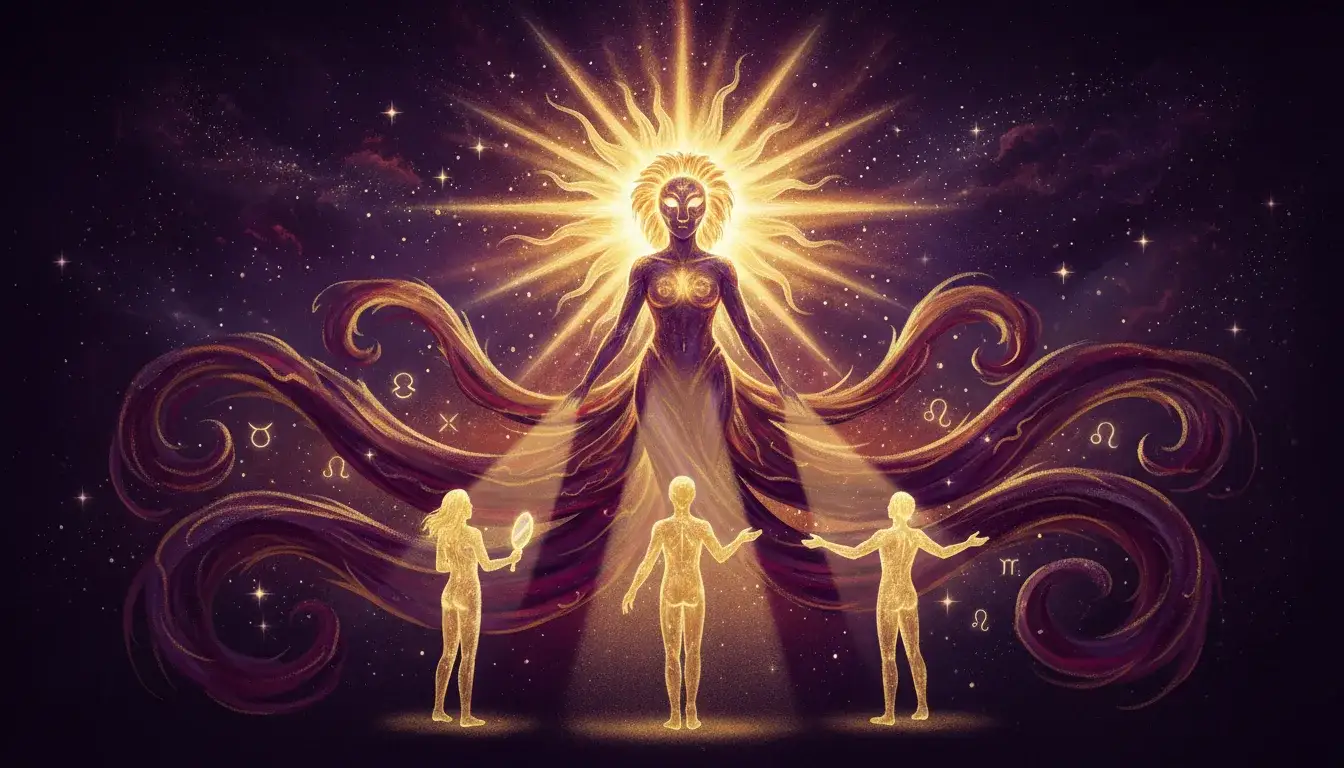
Indicating how a person wants to be seen
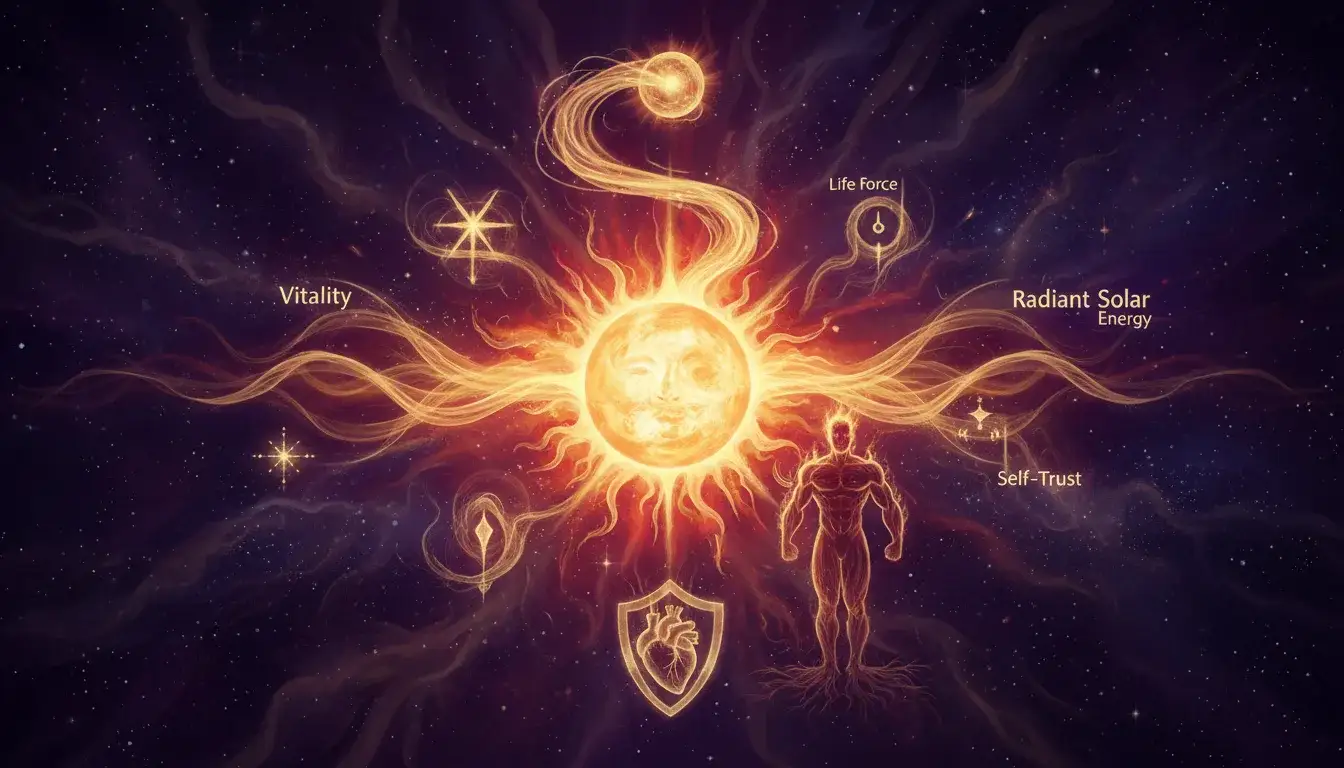
Connecting to vitality, resilience, and self-trust
The Sun as the Core of Identity
The Sun acts as the psychological center of gravity. It influences how a person asserts individuality and directs their will. A strong Sun brings clarity, motivation, and inner authority.
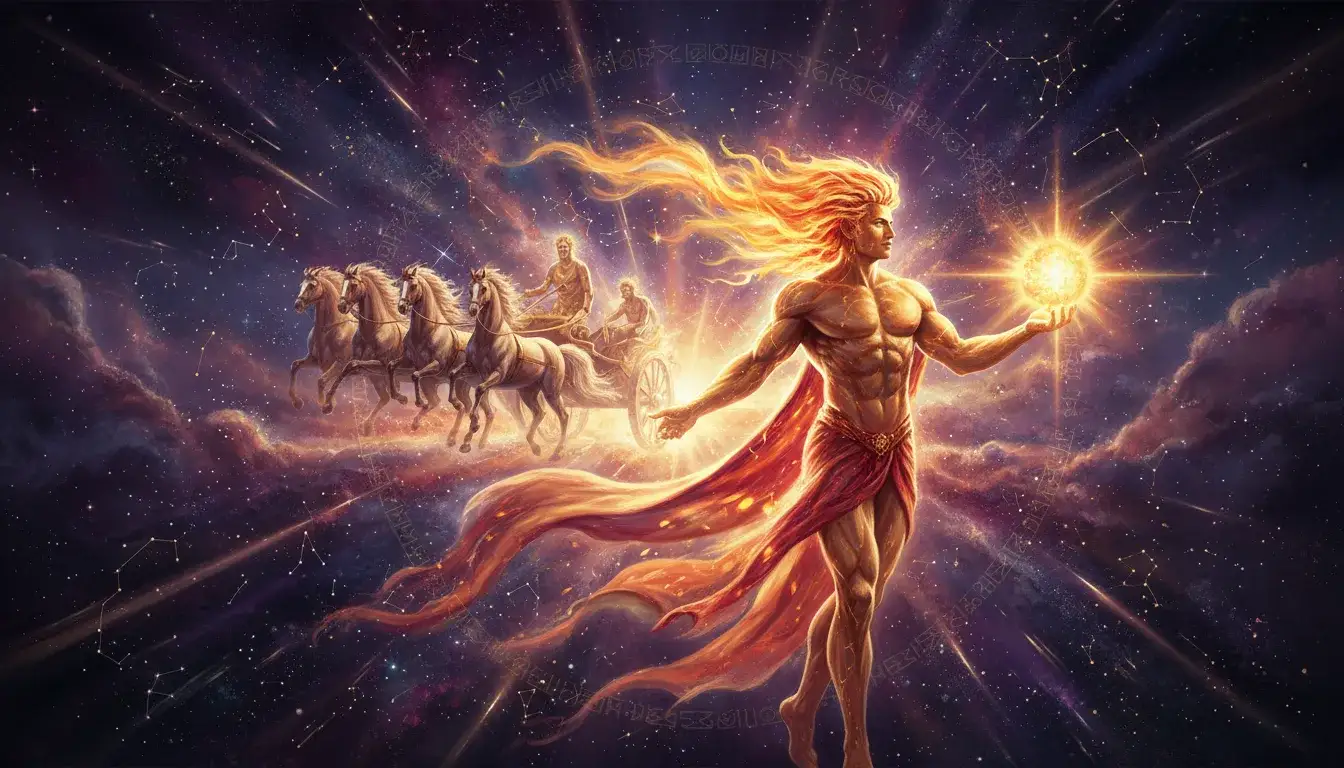
Symbolism of the Sun in Astrology
The Sun represents outward, masculine energy and a constant flow of conscious awareness. It's associated with light, day, and full visibility.
It’s the force behind visibility, decision-making, and purpose. The Sun answers the question: “Who am I becoming?”
The Sun as the Core of Identity
The Sun acts as the psychological center of gravity. It influences how a person asserts individuality and directs their will. A strong Sun brings clarity, motivation, and inner authority.
What the Sun reflects:
It also affects energy levels and emotional durability. In many charts, the Sun reveals how a person keeps moving forward when tested.
Symbolism of the Sun in Astrology
The Sun represents outward, masculine energy and a constant flow of conscious awareness. It’s associated with light, day, and full visibility.
Symbolic connections:
These archetypes link the Sun to personal power, recognition, and the drive to be seen and acknowledged.
The Sun’s Role in the Natal Chart
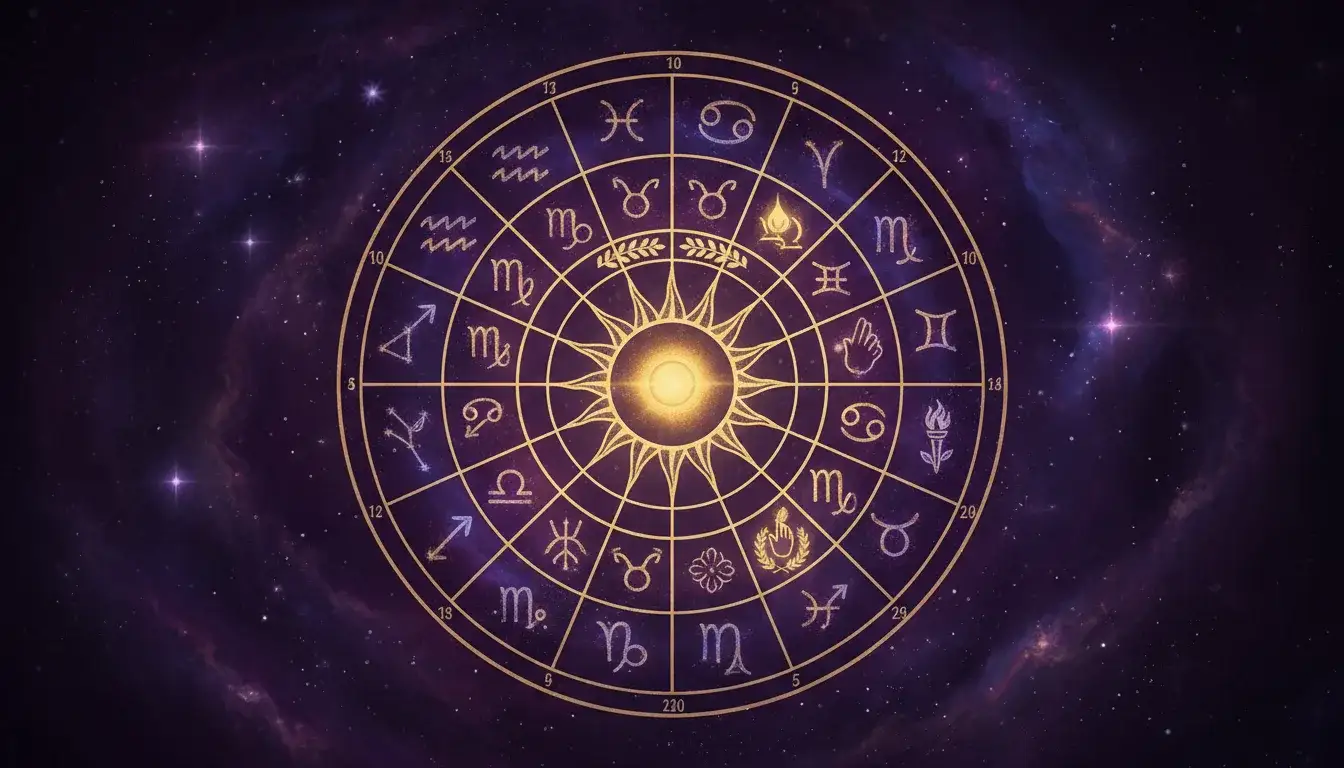
The Sun’s position in the natal chart sets the tone for personal identity and long-term direction. It influences how a person expresses their core self and where their energy naturally flows. Both the zodiac sign and the house it occupies provide essential clues to personality, confidence, and purpose.
The Sun sign shapes behavioral tendencies, communication style, and emotional tone. It reflects how someone feels when they’re most alive and aligned with themselves. The house placement shows the specific life areas where that identity is expressed and developed.
Together, sign and house placement reveal how someone wants to grow, be seen, and define their unique path.
Sun Sign Meaning and Personality Expression
The Sun sign describes the default personality traits and approach to life. It shapes temperament, decision-making, and the way someone tries to fulfill their purpose. It’s the “how” behind identity—how energy moves, how confidence builds, and how individuality expresses itself.
Each sign modifies the Sun’s core meaning, highlighting different needs, motivations, and strengths.
Sun by House Placement
The house where the Sun falls shows where someone wants to be seen, recognized, and impactful. It points to the area of life that brings fulfillment and where personal identity is shaped through real experiences.
Examples:
1st House
Focus on self-image, independence, and personal leadership
5th House
Creativity, children, romance, and risk-taking
7th House
Relationships, collaboration, public identity
10th House
Career, status, ambition, long-term goals
The house defines where a person channels ambition and seeks growth through external achievement or inner alignment.
The house defines where a person channels ambition and seeks growth through external achievement or inner alignment.
The Sun Through the Zodiac Signs — Personality and Self-Expression
The Sun’s sign placement shapes how identity unfolds. Each sign filters self-expression through different values, instincts, and core motivations.
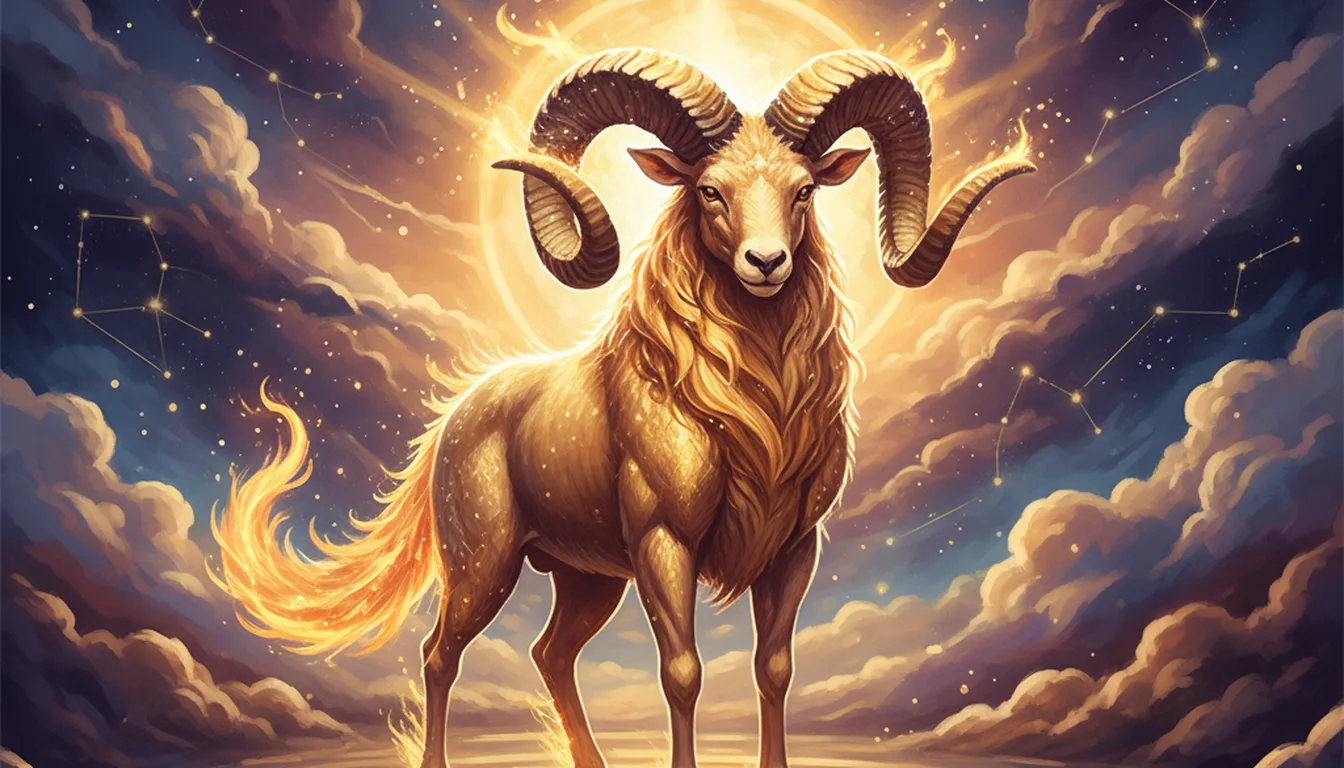
Sun in Aries
Bold initiative, pioneering spirit, direct self-expression
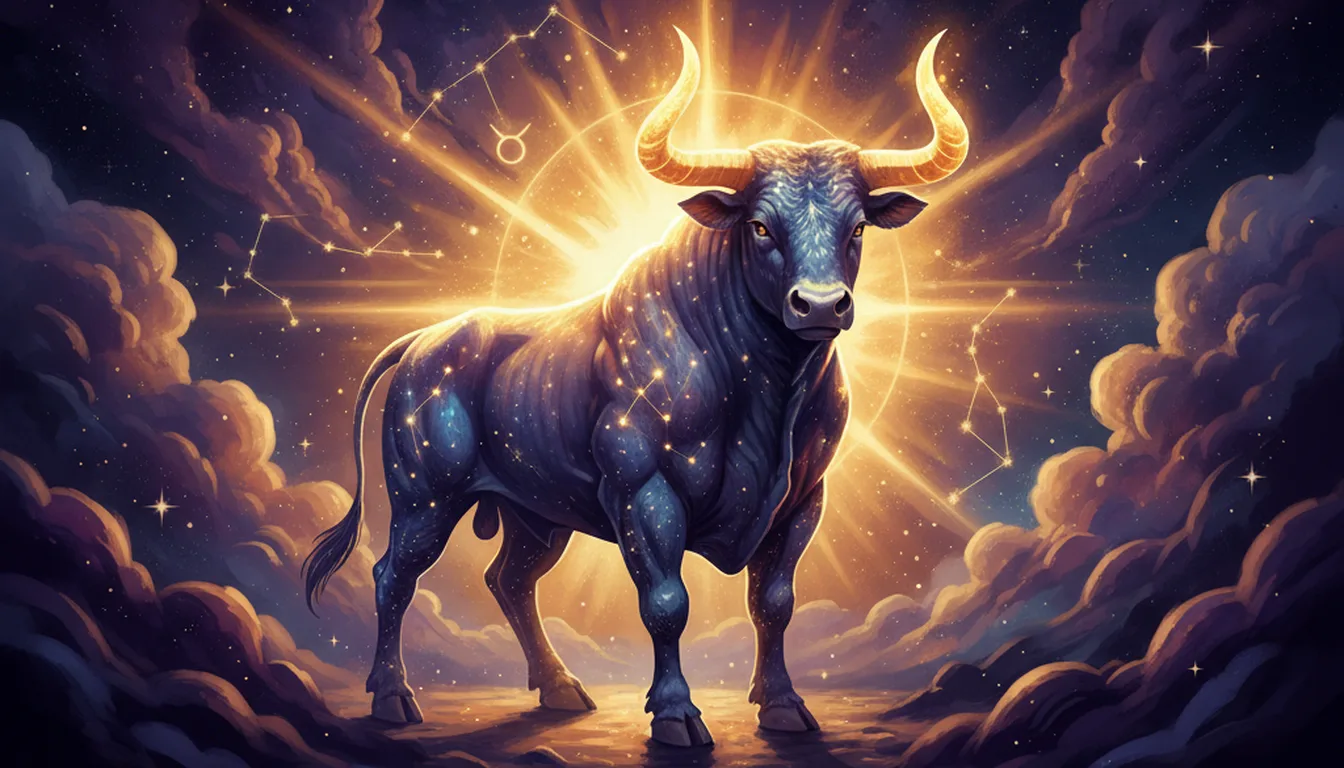
Sun in Taurus
Steady identity, values stability, practical self-worth
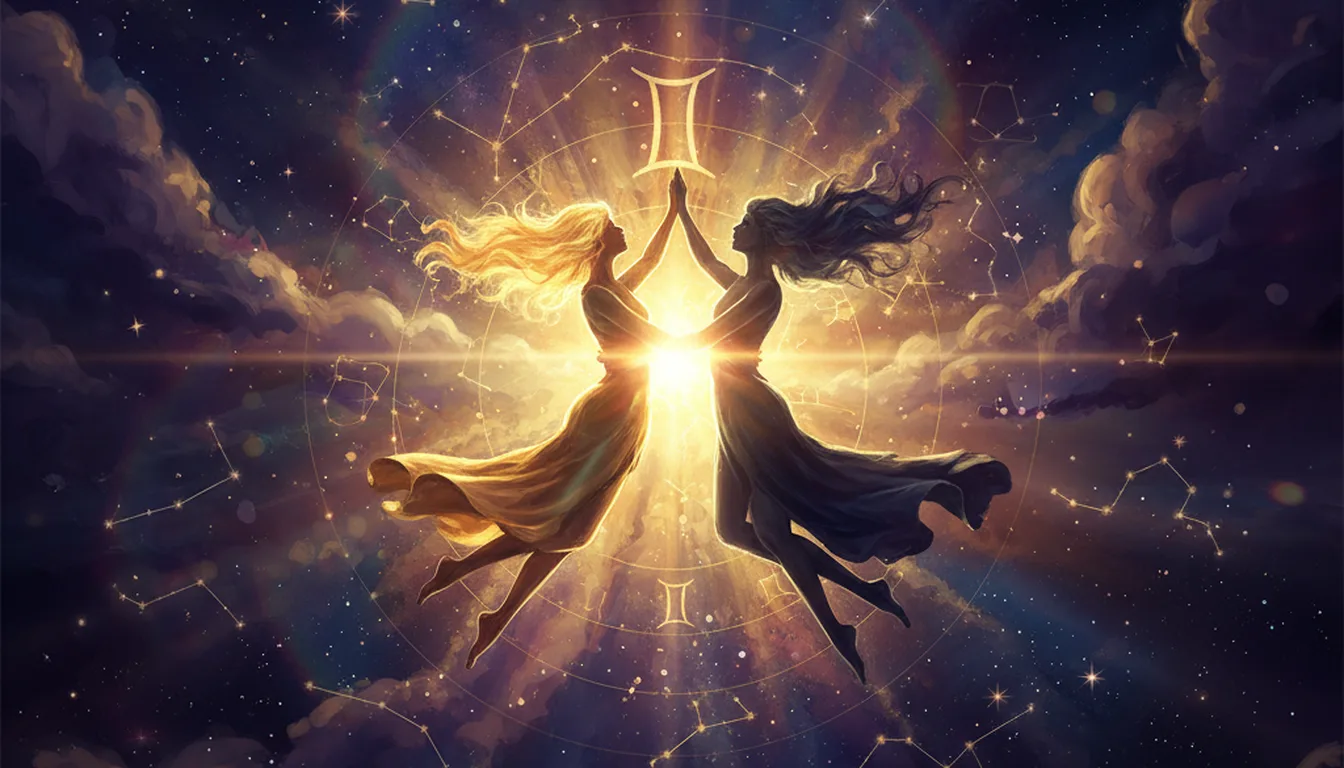
Sun in Gemini
Curious mind, adaptable identity, communicative expression

Sun in Cancer
Emotional depth, nurturing identity, protective self-expression

Sun in Leo
Natural home: creative, confident, seeks recognition and leadership
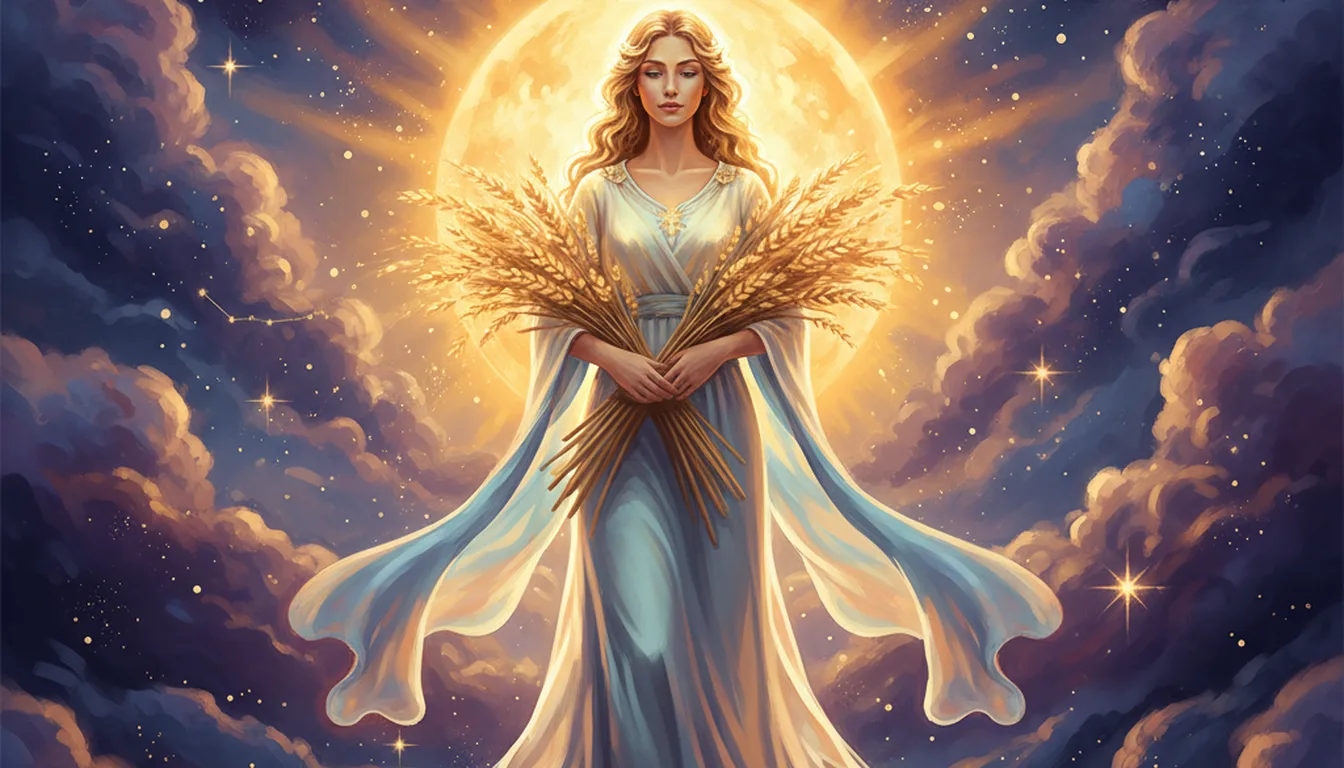
Sun in Virgo
Analytical identity, service-oriented, practical perfectionism
Sun in Libra
Diplomatic identity, seeks balance, relationship-focused expression

Sun in Scorpio
Intense identity, transformative power, deep self-awareness

Sun in Sagittarius
Philosophical identity, seeks truth, expansive self-expression
Sun in Capricorn
Ambitious identity, disciplined expression, goal-oriented self

Sun in Aquarius
Independent identity, innovative spirit, humanitarian focus
Sun in Pisces
Intuitive identity, compassionate expression, spiritual sensitivity
The Sun’s Elemental and Modal Qualities
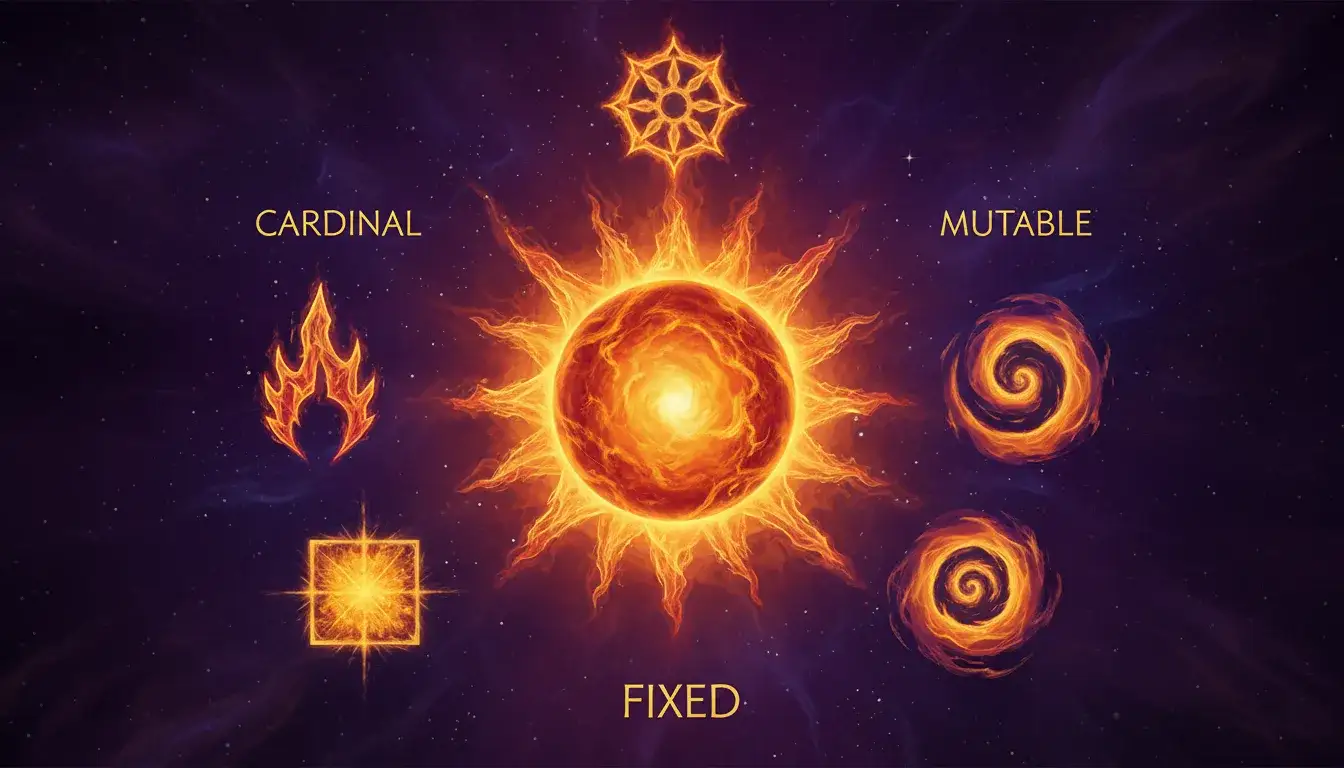
The Sun’s meaning in astrology shifts depending on its elemental and modal qualities. These traits shape how energy is expressed and what motivates personal growth. The element shows the emotional or energetic tone, while the modality explains how a person initiates or responds to change.
Both factors add depth to personality and influence how someone takes action, handles challenges, and expresses purpose. Together with the Sun’s sign and house, they create a more complete picture of the self.
Fire Element and the Sun’s Natural Affinity
The Sun has a strong natural resonance with the Fire element, especially as the ruler of Leo. Fire signs—Aries, Leo, Sagittarius—share traits like confidence, vitality, and instinctive action.
Fire energy is:

Passionate and bold
Motivated by vision and belief
Focused on inspiration and individuality
Often expressive and energetic in communication
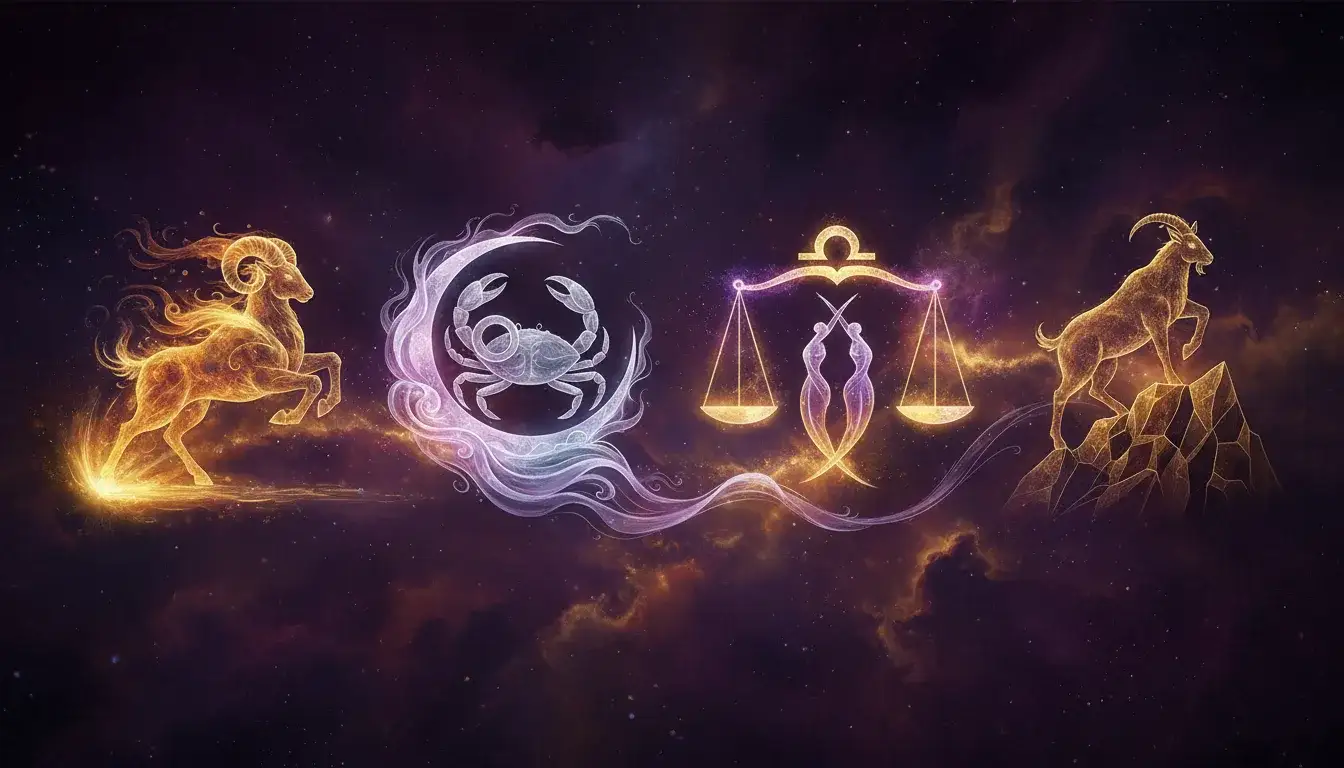
Cardinal signs
Aries, Cancer, Libra, Capricorn: initiate change, goal-oriented, action-focused
Fixed signs
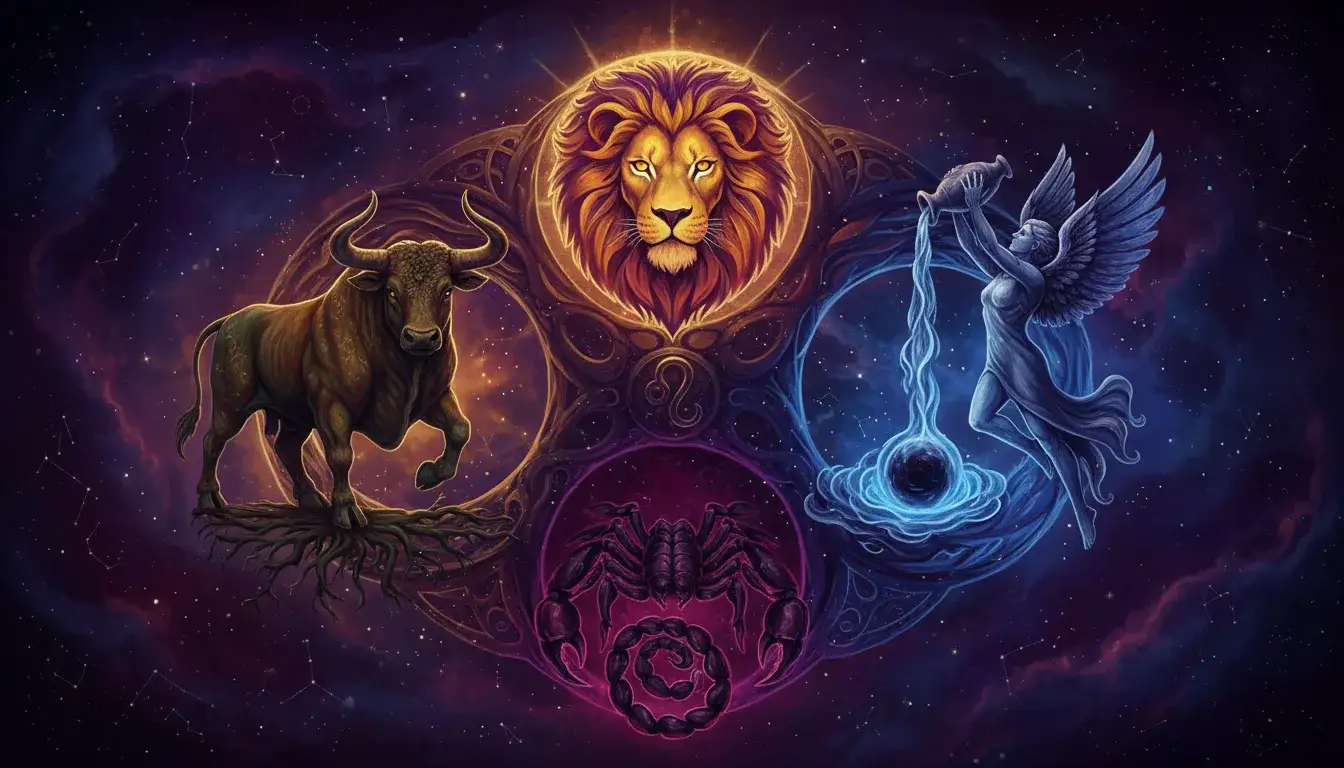
Taurus, Leo, Scorpio, Aquarius: maintain stability, deepen commitment, resist disruption
Mutable signs
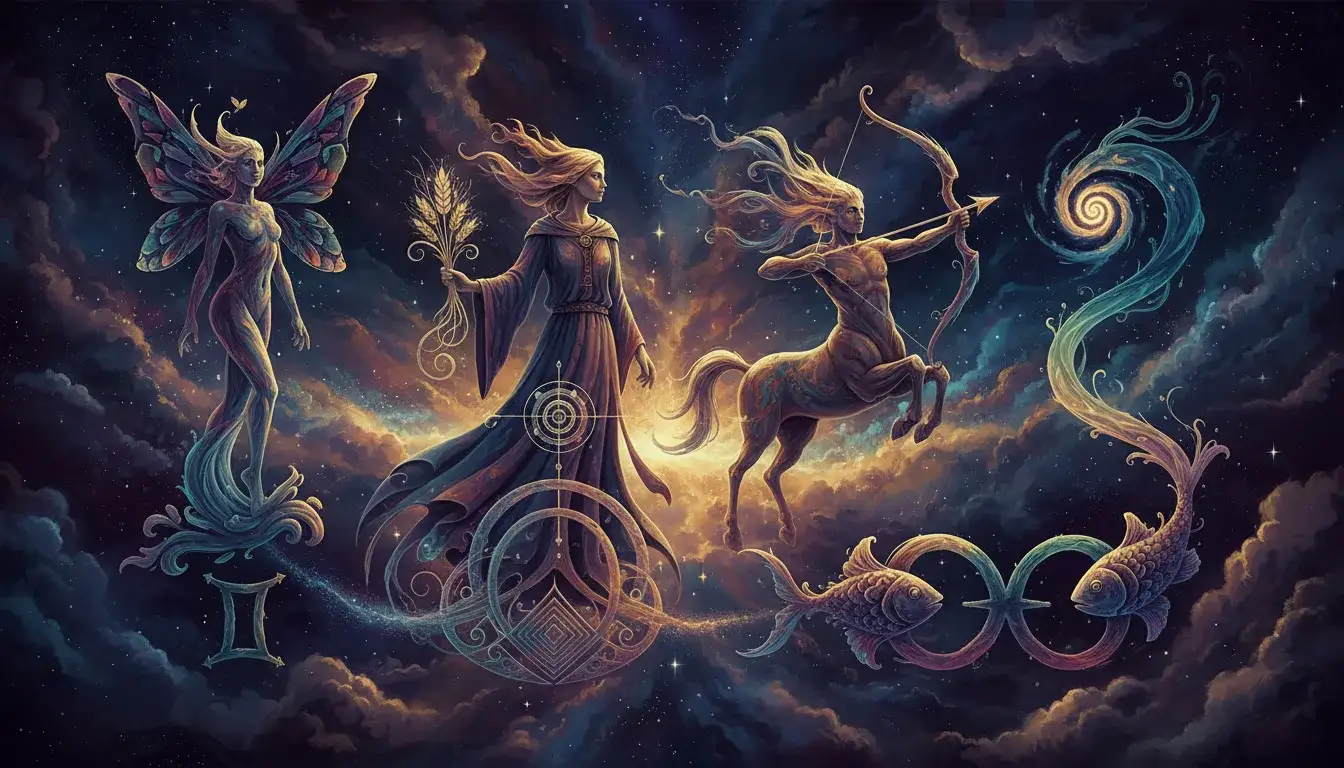
Gemini, Virgo, Sagittarius, Pisces: adapt easily, shift perspectives, stay flexible
The Sun’s Rulership and Dignities in Astrology
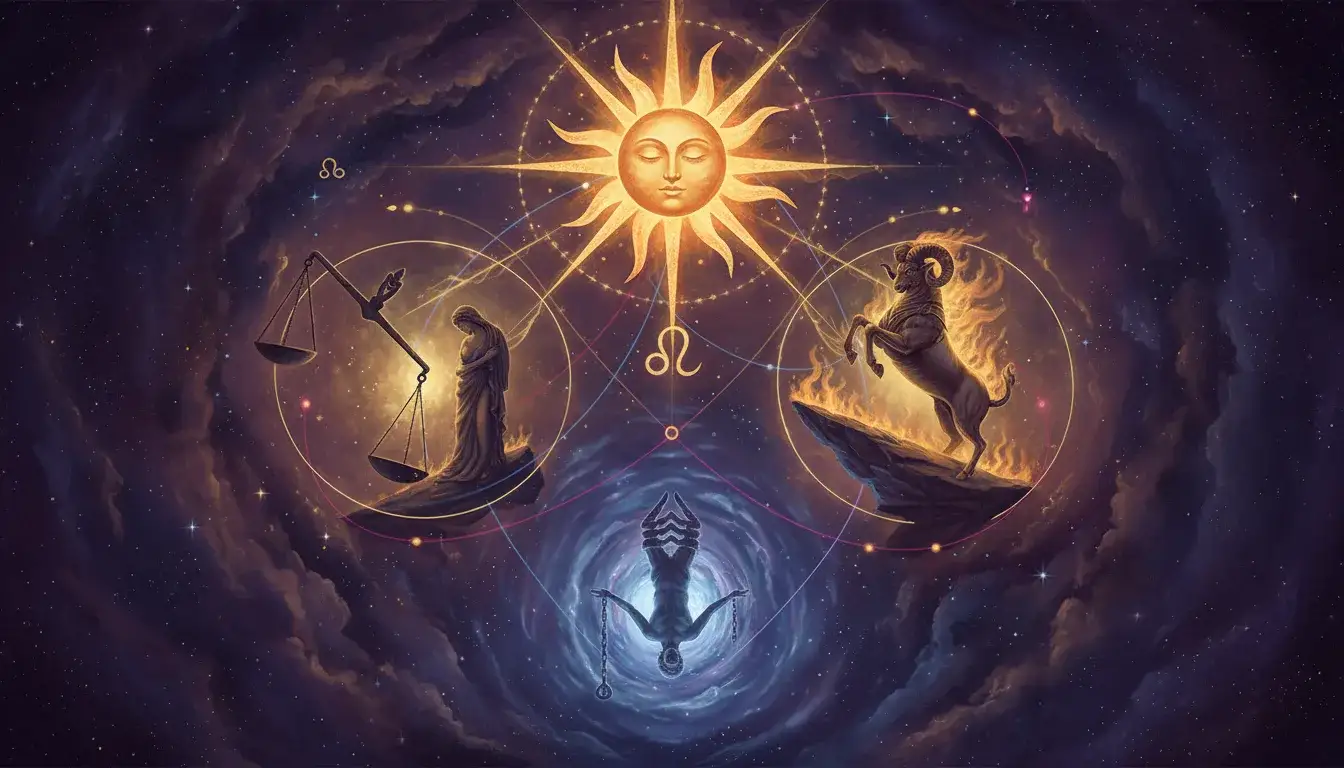
In traditional astrology, each planet has specific signs where its energy functions either strongly or with limitation. The Sun is most powerful in signs where it aligns with themes of confidence, will, and individuality. These placements affect how easily a person can express core traits tied to ego and identity.
Understanding rulership, exaltation, detriment, and fall helps explain the natural flow—or blockage—of solar energy in different zodiac contexts. These dignities give extra layers to how the Sun behaves in the chart.
Sun Rules Leo
The Sun rules Leo, a sign known for bold expression, loyalty, and personal charisma. In this placement, solar traits like leadership, courage, and creativity are emphasized.
People with the Sun in Leo often seek attention and thrive in roles where they can inspire, perform, or lead with pride.
Sun’s Exaltation, Fall, and Detriment
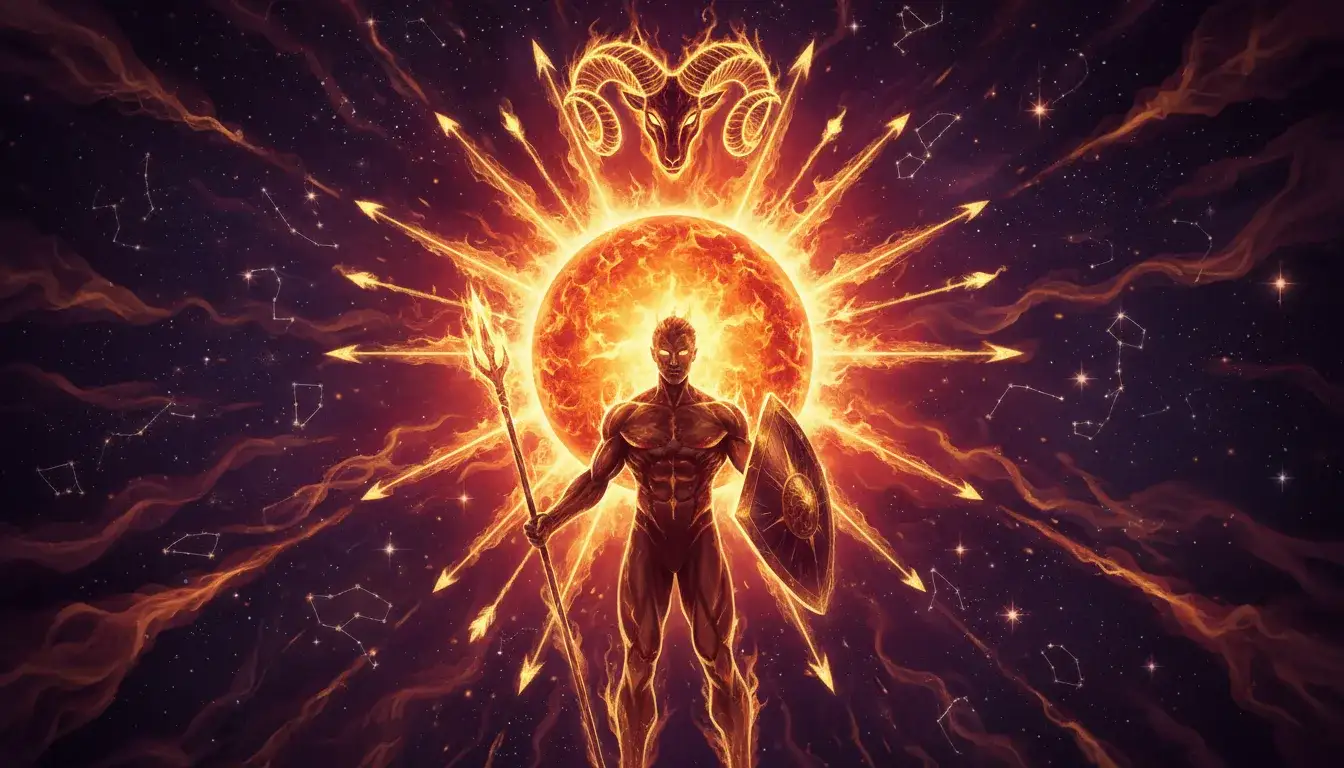
Sun exalted in Aries
Initiative and self-drive reach their peak. Boosts confidence, courage, clear sense of direction
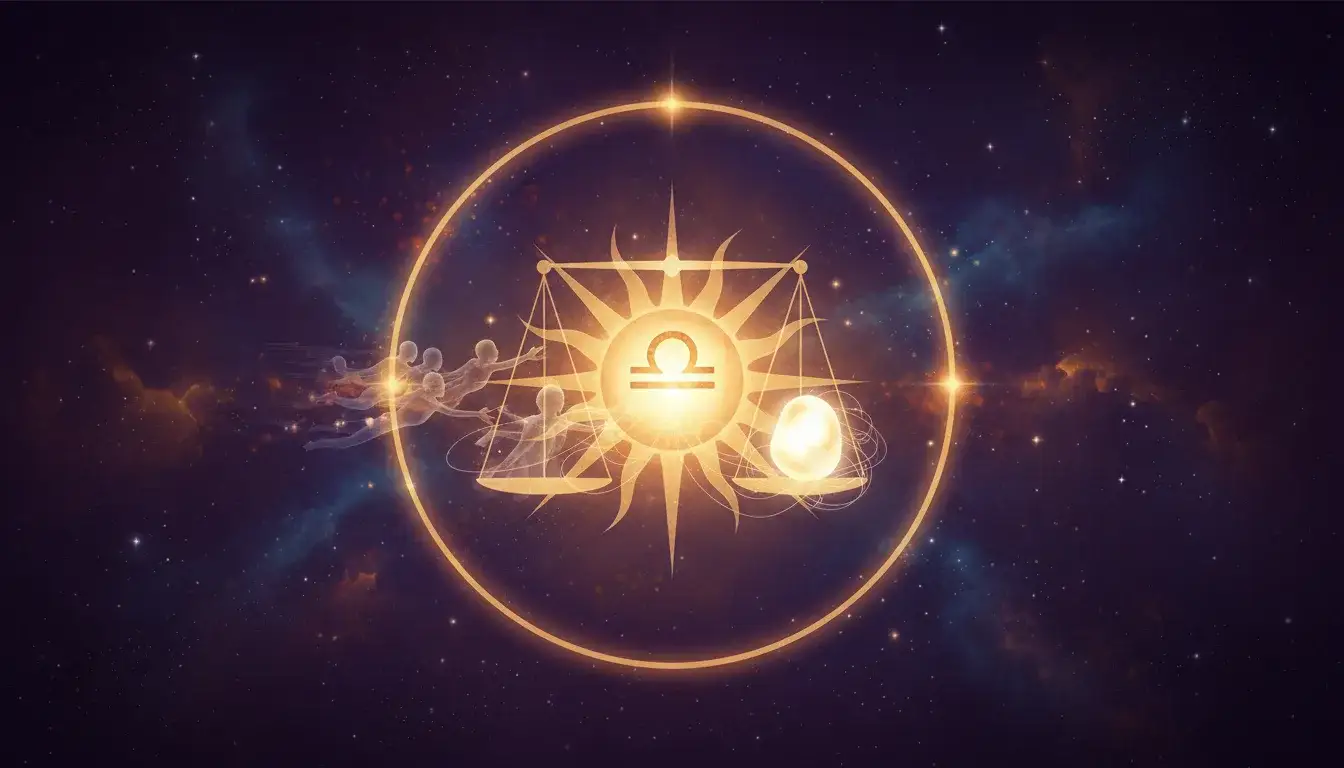
Sun in fall in Libra
Focus on others can weaken inner clarity. Stronger need for validation
Sun in detriment in Aquarius
Emphasis on collective identity can blur individual ego. Struggles with personal recognition
These dignities don’t determine worth but show how easily the Sun’s energy flows or gets challenged in expression.
The Sun vs. the Moon
The Sun and Moon form a foundational pair in astrology, representing two essential layers of personality. While the Sun reflects identity and life direction, the Moon governs emotion, instinct, and internal needs. Together, they shape how a person thinks, feels, and acts in daily life.
These two bodies work in tandem—one providing conscious focus, the other guiding unconscious response. Comparing them helps explain how someone balances logic and feeling, action and reaction, or visibility and privacy.
Conscious vs Subconscious Self
The Sun reveals how a person identifies themselves and where they aim to go in life. It’s linked to purpose, growth, and decision-making. Its influence shapes self-image and leadership traits.
The Moon reflects instinct, comfort, and emotional memory. It shows how someone reacts when vulnerable, how they nurture, and where they seek security. While the Sun shines outward, the Moon governs the hidden inner world.
Masculine vs Feminine Energy
The Sun symbolizes masculine energy—active, expressive, and externally focused. It’s tied to creation, leadership, and rational will.
The Moon represents feminine energy—receptive, intuitive, and inward-facing. It governs emotional flow, caregiving, and adaptability. Together, they reflect the full spectrum of personality and energy flow in a chart.
Aspects in Astrology
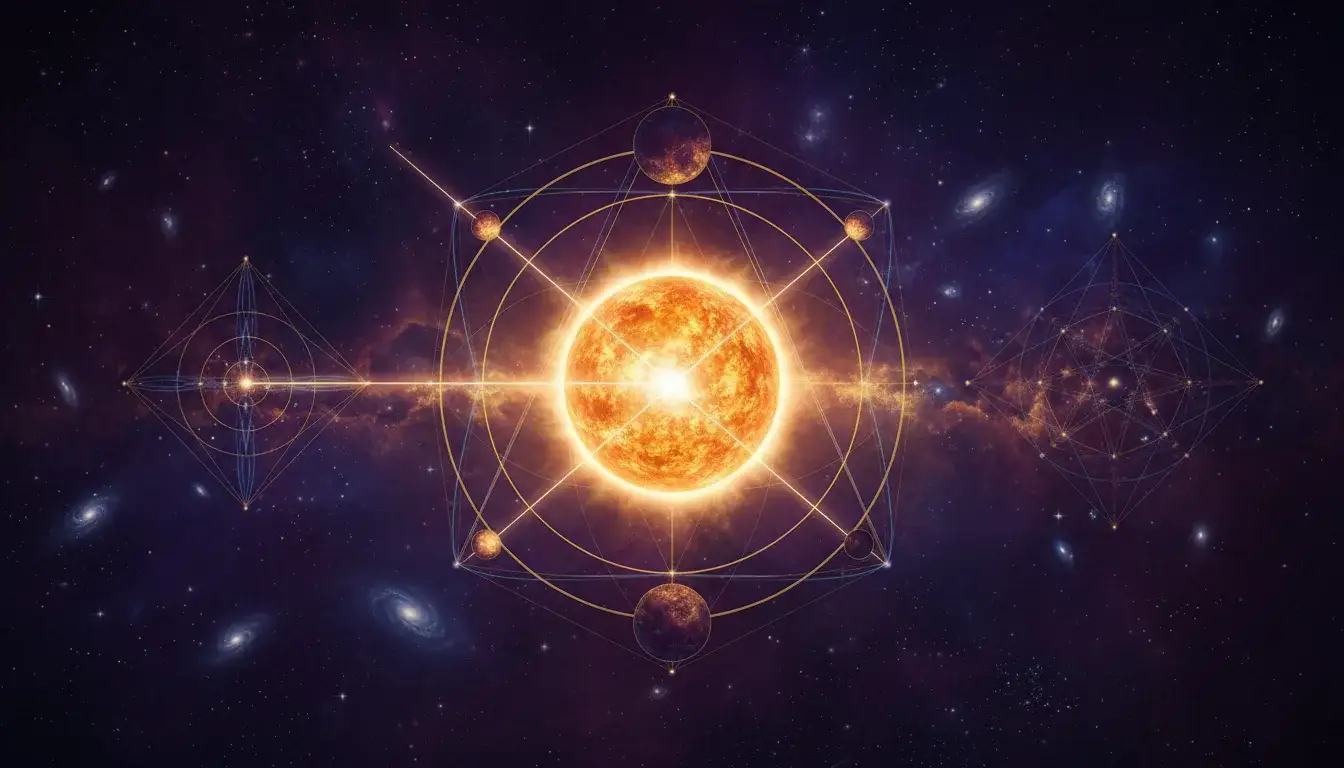
Aspects involving the Sun shape how its energy interacts with the rest of the chart. These angles reflect how identity, willpower, and self-expression either flow easily or encounter tension. Sun aspects influence confidence, direction, and how a person responds to external challenges or support.
Some aspects energize and boost self-assurance. Others can create friction, pushing someone toward growth through internal conflict or external resistance. Studying these patterns reveals where ego thrives and where it gets tested.
Sun Conjunctions and Oppositions
A conjunction occurs when the Sun aligns closely with another planet. This often fuses their meanings, blending identity with the qualities of that planet. For example, a Sun-Mercury conjunction intensifies thinking and communication as part of self-image.
An opposition places the Sun across from another planet, highlighting tension between self and others. These aspects often create a tug-of-war between personal goals and relationships. Balancing independence with compromise becomes key to growth.
Sun Trines, Squares, Sextiles
A trine reflects natural harmony and flow. It strengthens confidence and makes personal expression easier. A sextile offers opportunity through effort, helping talents emerge gradually.
A square creates inner friction and external obstacles. This can lead to overcompensation, insecurity, or bursts of ambition. While uncomfortable, squares often push someone to develop resilience and define themselves more clearly.
These aspects shape how confidently a person walks their path and how easily they integrate other life forces into their identity.
Transit Effects
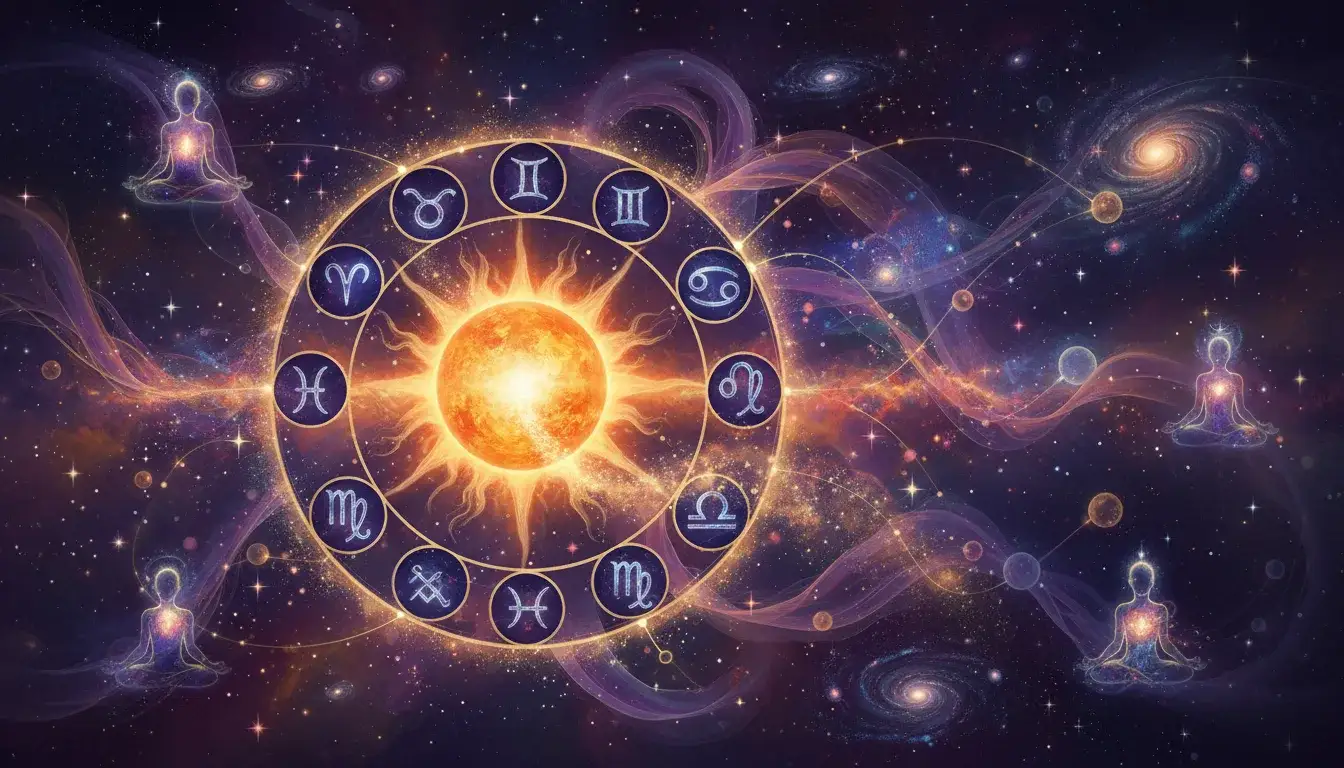
Transits of the Sun influence mood, focus, and motivation on both short and long timelines. These movements reflect shifting attention across life areas and help track natural cycles of energy and purpose. Each shift brings a new theme into focus and highlights different parts of the natal chart.
Sun transits are useful for timing decisions, planning creative work, or understanding emotional highs and lows. They also reveal when it’s time to rest, act, or redirect priorities.
Annual Solar Return
A solar return happens once a year, when the Sun returns to the exact degree it held at birth. This creates a unique chart used to outline themes and challenges for the year ahead. It’s often read as a kind of personal new year.
This chart helps identify where growth or renewal may happen, which areas require attention, and how to navigate the months until the next birthday. It often highlights shifts in purpose, career, or relationships.
Daily/Monthly Transits of the Sun
The Sun’s daily and monthly movements bring subtle shifts in energy and awareness. As it travels through different signs and houses, it lights up various areas of life and affects focus.
For example, the Sun moving through the 3rd house may highlight communication, while the 6th house emphasizes routine or health. These short-term phases guide attention, helping to align action with current inner needs.
The Sun in Vedic Astrology (Jyotish)
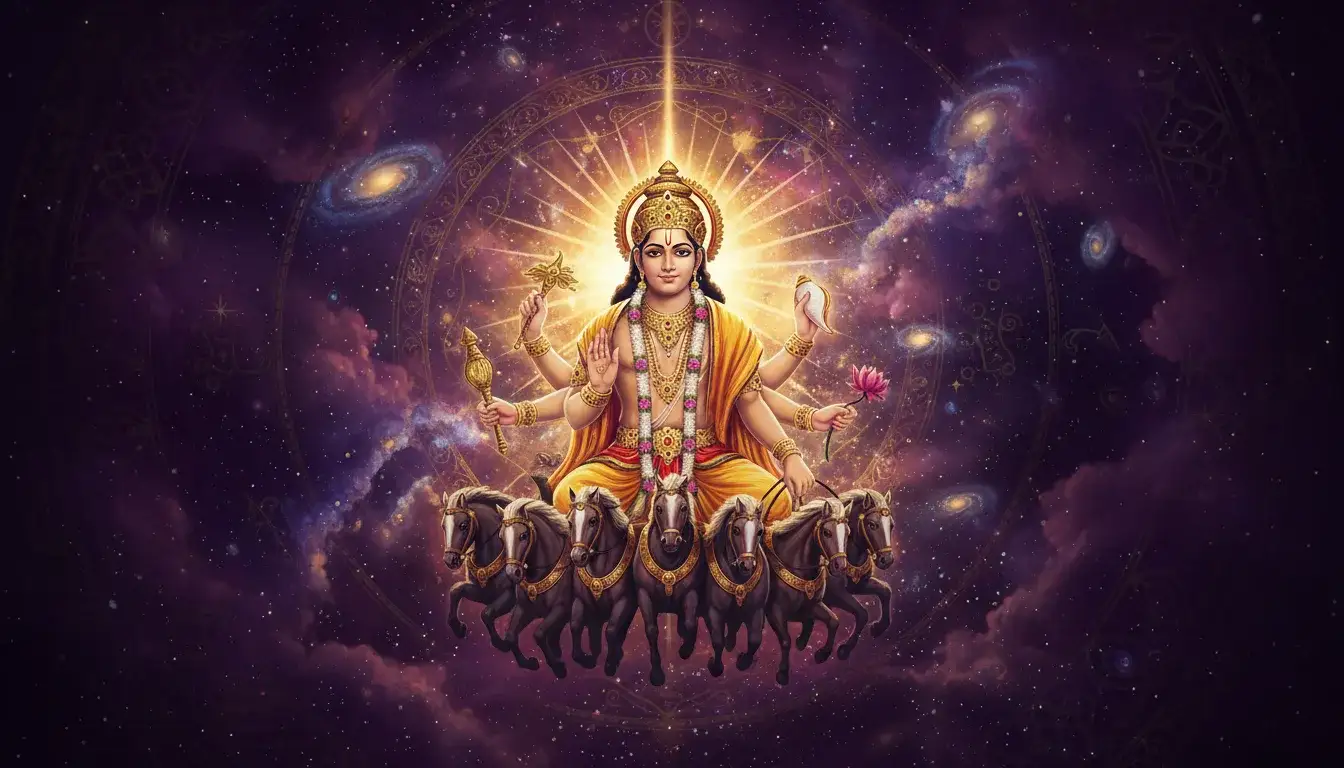
In Vedic astrology, the Sun is known as Surya and holds a position of supreme importance. It represents the Atman, or soul, and reflects the divine spark that drives purpose, clarity, and inner strength. More than just personality, Surya indicates one’s connection to truth, dharma, and cosmic order.
The Sun is seen as the king among planets, and its condition in the chart directly affects self-respect, direction, and moral clarity. It plays a leading role in defining how a person expresses integrity, claims authority, and fulfills their spiritual duties in life.
Surya – The Soul and Authority
Surya governs the soul’s light and inner authority. It reflects personal power, high status, and the ability to lead through vision and clarity. The Sun also symbolizes father figures, government, and one’s relationship with rulership or hierarchy.
In Vedic planetary hierarchy, the Sun is considered royal and masculine—steady, constant, and radiant. Its strength contributes to confidence, consistency, and the ability to act in alignment with higher values. A well-placed Surya supports independence, charisma, and a strong sense of mission.
Sun and Karma in Dharma-Oriented Charts
In dharma-focused charts, the Sun reflects karmic direction and spiritual evolution. It indicates how one fulfills life’s deeper purpose and where leadership or service may arise. It also points to areas where ego must be refined to align with soul truth.
When exalted in Aries, the Sun gives courage, vision, and natural command. When debilitated in Libra, it may bring dependence on others or struggles with confidence and self-definition. These placements guide how someone learns to express power with wisdom and responsibility.
Challenges of a Weak
or Afflicted Sun
When the Sun is weak or poorly aspected in a chart, personal identity may feel unstable or underdeveloped. This can affect confidence, motivation, and the ability to assert individuality. The person may struggle to define their purpose or act with clarity and strength.
Solar weakness doesn’t mean failure, but it does suggest that building self-trust, direction, and resilience may take more conscious effort.
Signs of Low Solar Energy
A weakened Sun can lead to:
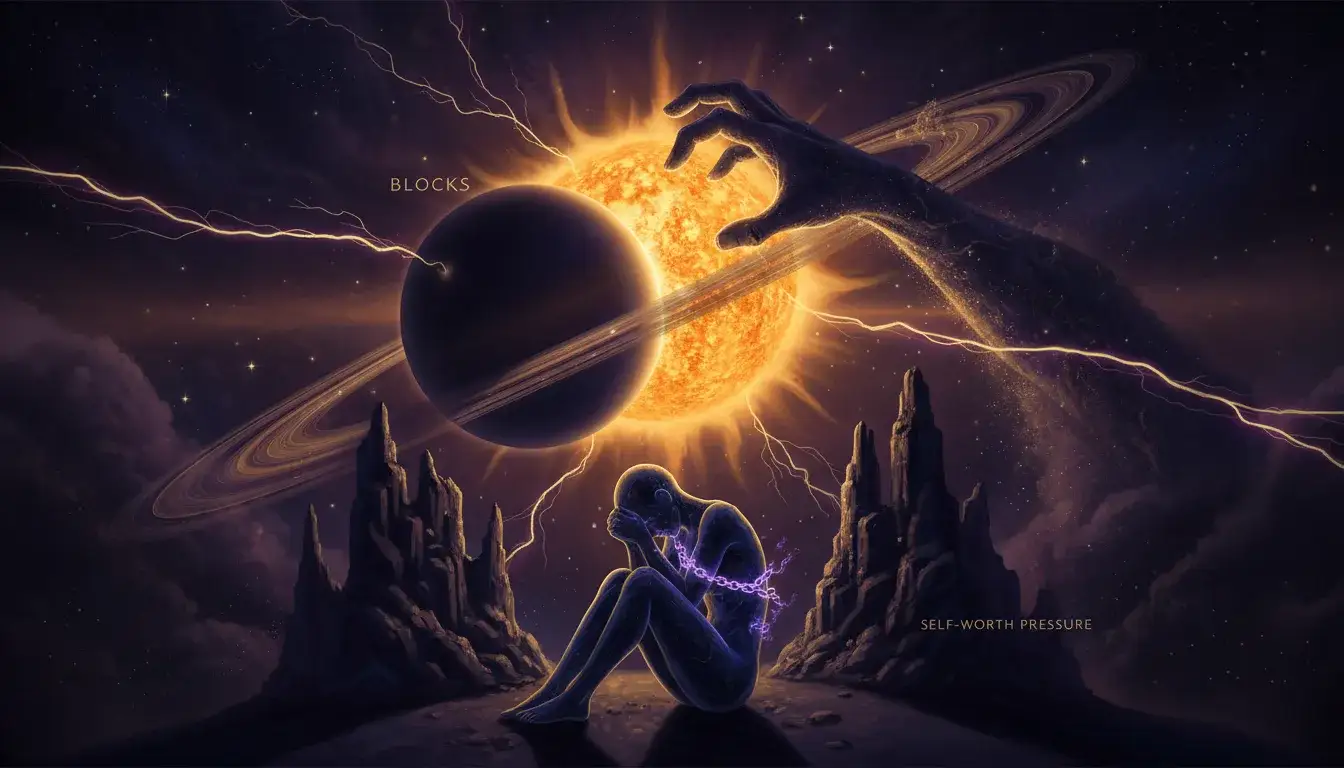
Sun-Saturn hard aspects
May block self-worth, creating pressure and fear of failure
Sun-Neptune squares or oppositions
Can blur identity, fueling confusion or disconnection from personal truth

Sun-Pluto tensions
Might lead to control issues or fear of losing power
These patterns may appear as passivity or hesitation in taking ownership of one’s path.
Common Difficult Aspects
Certain planetary aspects can challenge solar expression:
These dynamics often require inner work to separate ego from fear and rebuild a steady internal compass.
Healing and Empowering
the Sun Within
Strengthening the Sun means reconnecting with purpose, self-trust, and the ability to lead from within. When the Sun is empowered, identity becomes clearer, choices feel more aligned, and personal energy flows with greater ease. Healing solar wounds often involves claiming one’s voice, honoring inner truth, and developing the courage to be seen.
This process can include practical tools, symbolic work, and conscious engagement with core values. It’s about becoming more present in life through clarity and intentional action.
Working with Solar Archetypes
To activate the Sun’s energy, focus on qualities like self-honesty, courage, and authentic leadership. This means showing up fully and owning one’s impact without apology.
Solar healing may also involve:
Sun-based meditations
Build focus and inner clarity
Mantras like the Gayatri
Align with light and spiritual purpose
Journaling or visualization
Around life goals and creative direction
Spending intentional time in sunlight
To recharge and reflect
Reconnecting with the solar self often brings a renewed sense of direction and empowerment.
Practical Solar Strengthening Practices
Several methods help awaken solar strength:
Creative expression, self-discipline, and acting from personal truth are key to building solar resilience.
Summary: Why the Sun Matters in Astrology
The Sun represents the foundation of self-awareness in astrology. It reflects core identity, personal drive, and the desire to express individuality in the world. Every other element in the chart builds around this central force.
As the chart’s anchor, the Sun shapes confidence, creativity, and inner strength. Its placement reveals how someone defines purpose, where they find motivation, and how they seek growth.
Understanding the Sun is key to understanding life direction. It helps explain why certain goals feel fulfilling, where leadership potential lies, and how a person becomes more fully themselves over time.