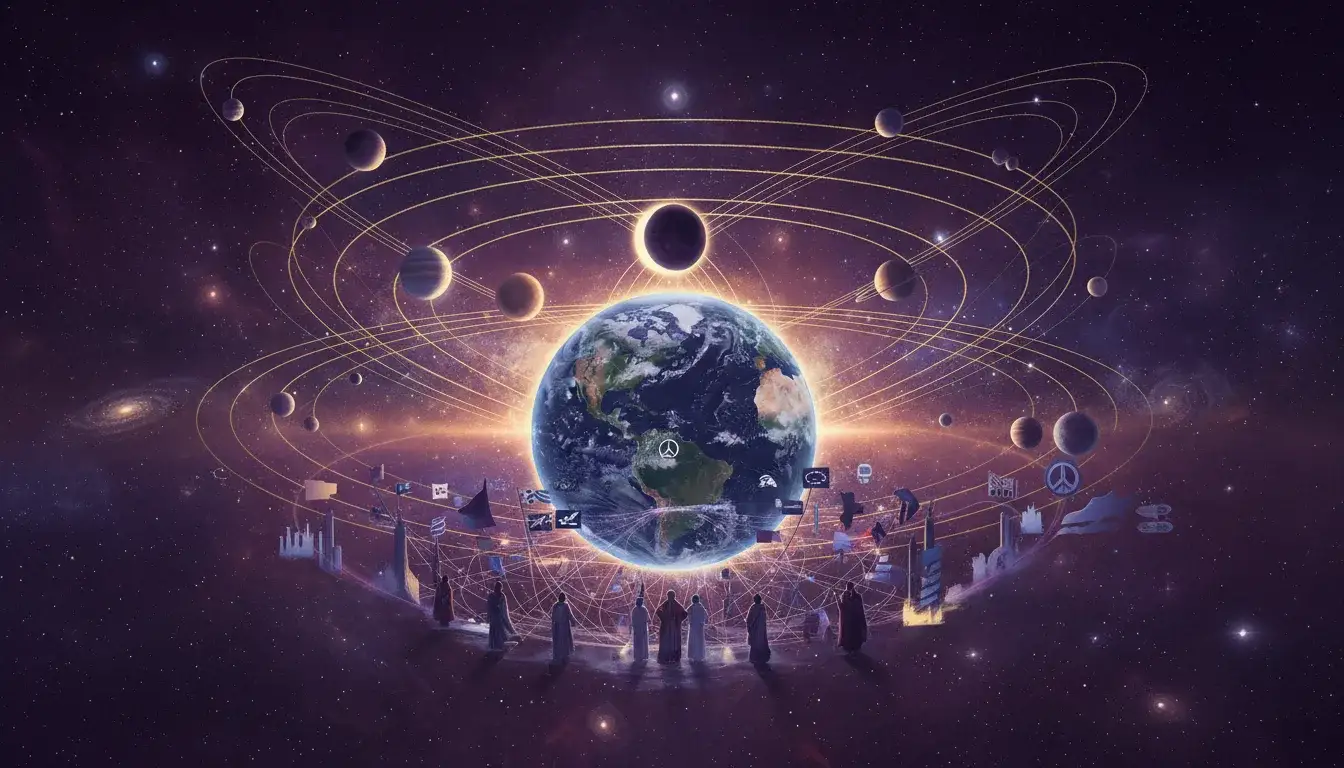
Mundane Astrology focuses on collective events instead of personal charts. It looks at how celestial movements correlate with political shifts, social changes, and historical turning points.
What is Mundane Astrology?
This type of astrology interprets planetary alignments in relation to global affairs. It analyzes how the positions of planets relate to governments, nations, disasters, revolutions, and public sentiment.
The term comes from the Latin mundus, meaning the earth or global domain. While Natal Astrology examines individual destiny, Mundane Astrology examines mass behavior and societal structures.
Core Philosophy of Mundane Astrology
The main principle assumes that cosmic cycles mirror historical phases. Planetary movements symbolize shifts in ideology, power, and culture.
Rather than focusing on personal transits, this approach observes patterns in countries and collective consciousness.
Historical Origins
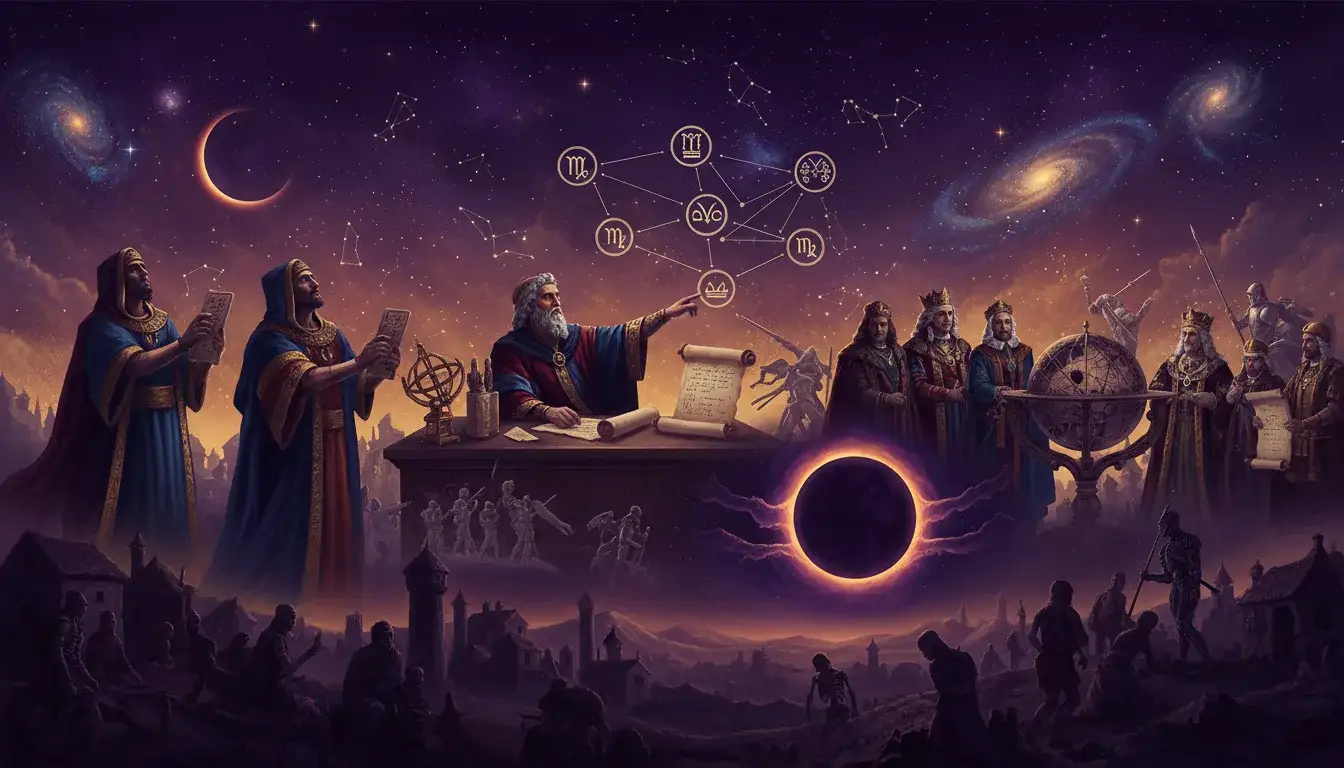
This tradition dates back to Mesopotamian civilizations. Babylonian priests charted eclipses and predicted royal fates based on planetary alignments.
In ancient Greece, Ptolemy documented the foundations of Mundane Astrology in Tetrabiblos. He described how planetary movements reflect the fate of empires.
During the Renaissance, this practice was revived in European courts. Monarchs relied on astrologers to guide decisions in warfare and diplomacy.
Mundane Charts in Medieval Times
Medieval astrologers used solar and lunar eclipses to foresee wars and plagues. Ingress charts helped forecast seasonal events and regional outcomes.
Core Techniques
Mundane astrologers rely on several chart types. Each method sheds light on different dimensions of collective experience.
Planetary Cycles and Their Role
Jupiter–Saturn conjunctions happen every 20 years and reflect major political cycles. These events often align with leadership changes or economic shifts.
Uranus, Neptune, and Pluto cycles mark generational transformation. Their long orbits correspond to ideological revolutions and systemic collapse.
House and Sign Importance in Mundane Charts
Each house represents a sector of society. The 10th links to leaders, the 6th to public health, and the 2nd to national finances.
Signs add thematic flavor to planetary placements. Aries signals conflict; Libra hints at diplomacy and law.
Application of Mundane Astrology Today
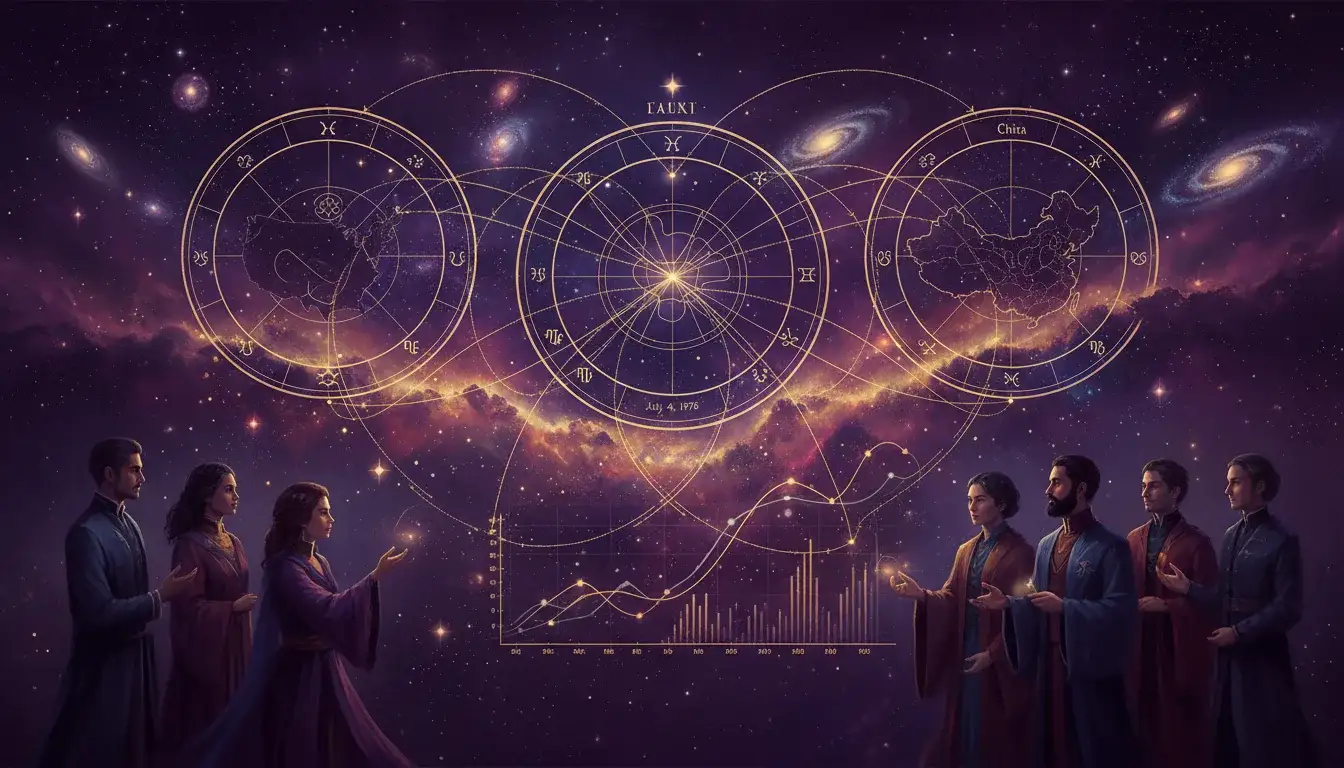
Modern astrologers apply these tools to examine global developments. They study economic indicators, government transitions, military actions, and social unrest.
Events such as 9/11, the 2008 financial crisis, and the pandemic drew renewed interest to astrological cycles. Many of these correlated with major transits or eclipses.
Countries and National Charts
Each nation has a symbolic birth chart. For the U.S., many astrologers rely on the Sibley chart, set for July 4, 1776.
Charts are also calculated for Russia (1991), China (1949), and the UK (1801). Transits to these charts highlight collective pressure points.
Some charts are based on constitutional signatures, while others focus on coronations or unifications.
Common Planetary Meanings
Each planet has a public and political significance. Their transits reveal trends in global affairs.

Sun
Leadership, presidents, national visibility

Moon
Public sentiment, population, mass mood

Mercury
Media, communication, transportation

Venus
Currency, peace treaties, social climate

Mars
Military action, violence, political aggression
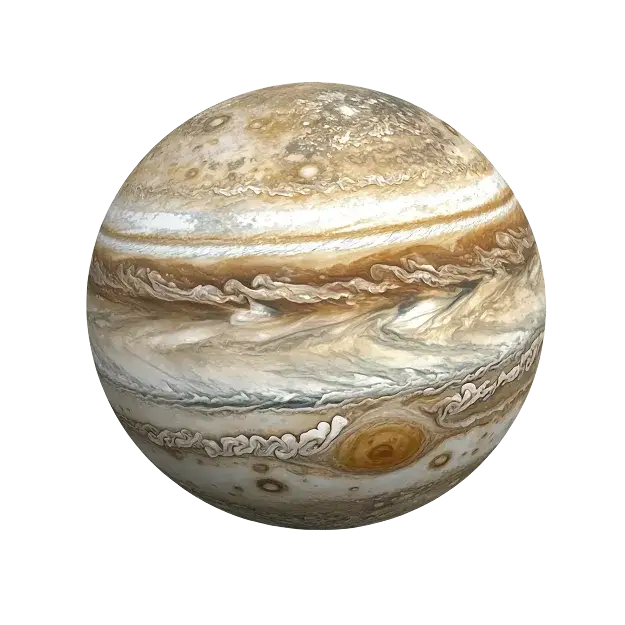
Jupiter
Laws, justice, religion, expansion

Saturn
Authority, government, structure, repression

Uranus
Rebellion, technological shifts, reform

Neptune
Ideology, mass psychology, confusion, epidemics

Pluto
Control, collapse, rebirth, secret power
Real-World Examples of Mundane Astrology in Action
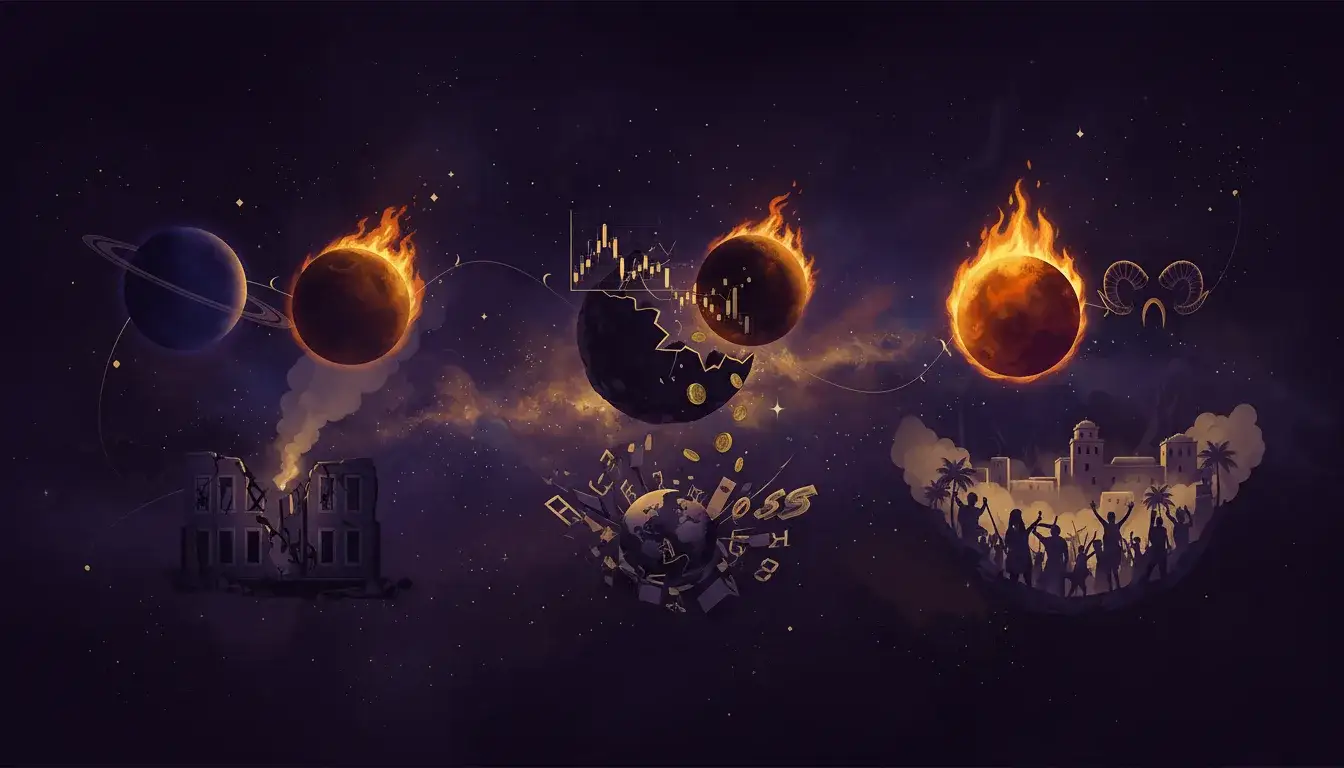
In 2001, Saturn opposed Pluto just months before 9/11. Astrologers noted this tension as a potential sign of structural crisis.
The 2008 recession aligned with Pluto's entry into Capricorn, symbolizing the collapse of financial systems.
Uranus in Aries correlated with Arab Spring uprisings and global unrest.
Limitations and Criticism
This field faces skepticism due to difficulties with national chart timing. Determining a country's true "birth moment" is subjective.
Events often confirm patterns in hindsight. Real-time prediction is more speculative and depends on skilled interpretation.
Critics argue that broad interpretations can lead to confirmation bias.
Future of Mundane Astrology in a Globalized Context

Interest in mass astrology continues to grow. As political uncertainty increases, more turn to symbolism for context.
Digital societies raise new questions. How do planetary cycles reflect online communities, data empires, and global movements?
Some astrologers combine this approach with economic theory and political analysis. Others look at climate patterns and technological disruption.
Summary — Why Mundane Astrology Still Matters
This system tracks archetypal patterns across human history. It provides a symbolic framework to observe shifts in leadership, power, and collective mood.
Rather than predicting exact events, it highlights potential periods of transformation or tension.