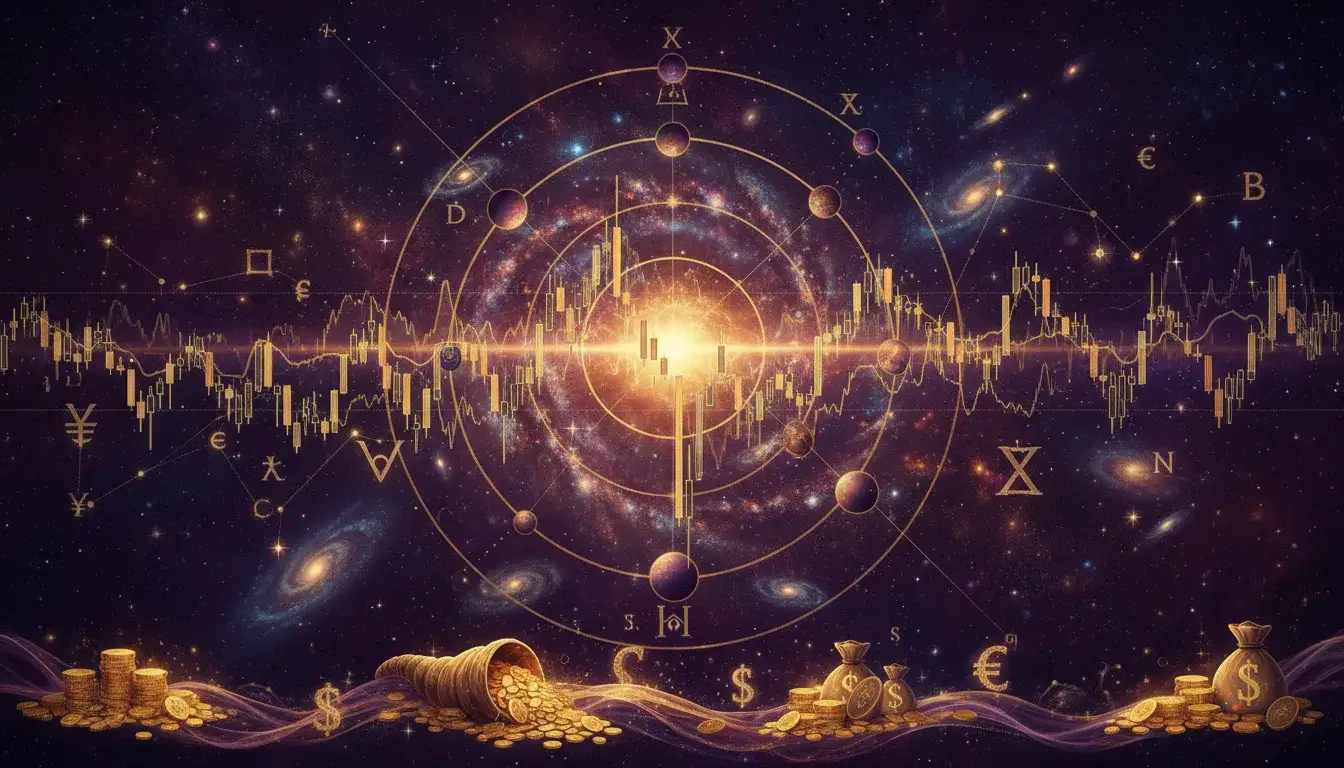
Financial astrology is a niche field that blends astrology with market forecasting. It analyzes planetary cycles and cosmic patterns to anticipate economic trends and investor behavior.
What Is Financial Astrology?

Financial astrology focuses on how celestial movements correlate with financial markets. It's not about daily horoscopes but about identifying long-term patterns driven by planetary alignments.
It targets stocks, cryptocurrencies, commodities, and economic cycles. Some traders consult natal charts of companies or markets before making decisions.
Financial Astrology vs Traditional Market Analysis
Traditional analysts rely on numbers, earnings, and economic indicators. Astrologers look at planetary aspects and transits.
For some, astrology supplements classic tools like technical analysis. Others view it as an intuitive timing system.
History and Origins
The roots go back thousands of years. Ancient Babylonians tracked Venus and Jupiter cycles to plan harvests and trade.
During the Renaissance, astrologers advised kings on wars and treasury matters. Market predictions based on stars aren't a new idea.
In the 20th century, astrologers like Louise McWhirter and W.D. Gann developed systems based on celestial cycles. Gann's techniques became legendary in trading circles.
W.D. Gann and Planetary Geometry
Gann's charts included planetary angles and retrogrades. He used tools like the Square of Nine and Gann Wheel to predict highs and lows.
He also believed planetary relationships could signal market tops and bottoms. Some of his methods still influence traders today.
Core Concepts

This field operates on the belief that planets influence collective emotions. These emotions shape buying and selling decisions.
Key astrological elements:
Planetary Transits and Retrogrades
When a planet moves over a key zodiac point, it can affect markets. Mercury retrogrades, for example, often coincide with communication errors and market confusion.
Venus and Mars retrogrades can influence sectors like luxury, real estate, and energy.
Lunar Phases and Market Sentiment
Full moons and new moons are linked with emotional extremes. Many reversals or breakouts happen near these points.
Some traders monitor lunar cycles as timing triggers for entries or exits.
Eclipses and Black Swan Events
Solar and lunar eclipses are seen as destabilizing. They often line up with major geopolitical or economic surprises.
For example, the 2008 financial crash aligned with Pluto's entry into Capricorn, signaling systemic restructuring.
Outer Planets and Long-Term Cycles
Jupiter, Saturn, Uranus, Neptune, and Pluto shape generational trends. Their transits relate to inflation, tech booms, or economic resets.
Jupiter-Saturn conjunctions every 20 years often signal shifts in economic paradigms.
How Financial Astrology Works in Practice
Astrologers build charts based on key market dates. These include a company's IPO, stock listing, or even the first Bitcoin transaction.
Using planetary positions from ephemerides, they forecast potential turning points. Some also compare charts of central banks and currencies.
Many rely on specialized software like Solar Fire or AstroGold to visualize cycles and aspects.
Real-World Case Studies
Financial Astrology Tools and Techniques
Astro traders often combine astrology with Gann angles, Fibonacci levels, or time cycles. Tools include:
Charts may include aspects like squares (tension), trines (ease), and oppositions (polarity). These are tracked alongside market data.
Common Strategies in Astro Trading
Some traders mark "planetary reversal dates" on their calendars. These dates often coincide with tops or bottoms.
Others match planetary cycles with earnings seasons or central bank meetings. Timing decisions become part of strategy.
Some advanced users even apply astro-cartography to evaluate how different locations respond to market changes.
Financial Astrology in the Modern Era
In recent years, it gained popularity in crypto and meme-stock communities. Volatility made people seek alternative timing methods.
Online forums and YouTube channels now host active discussions on astro-finance. Courses and forecasting services have grown.
Astro finance is also merging with machine learning models. Some algorithms factor in moon phases and planetary positions.
Criticism and Scientific Viewpoint
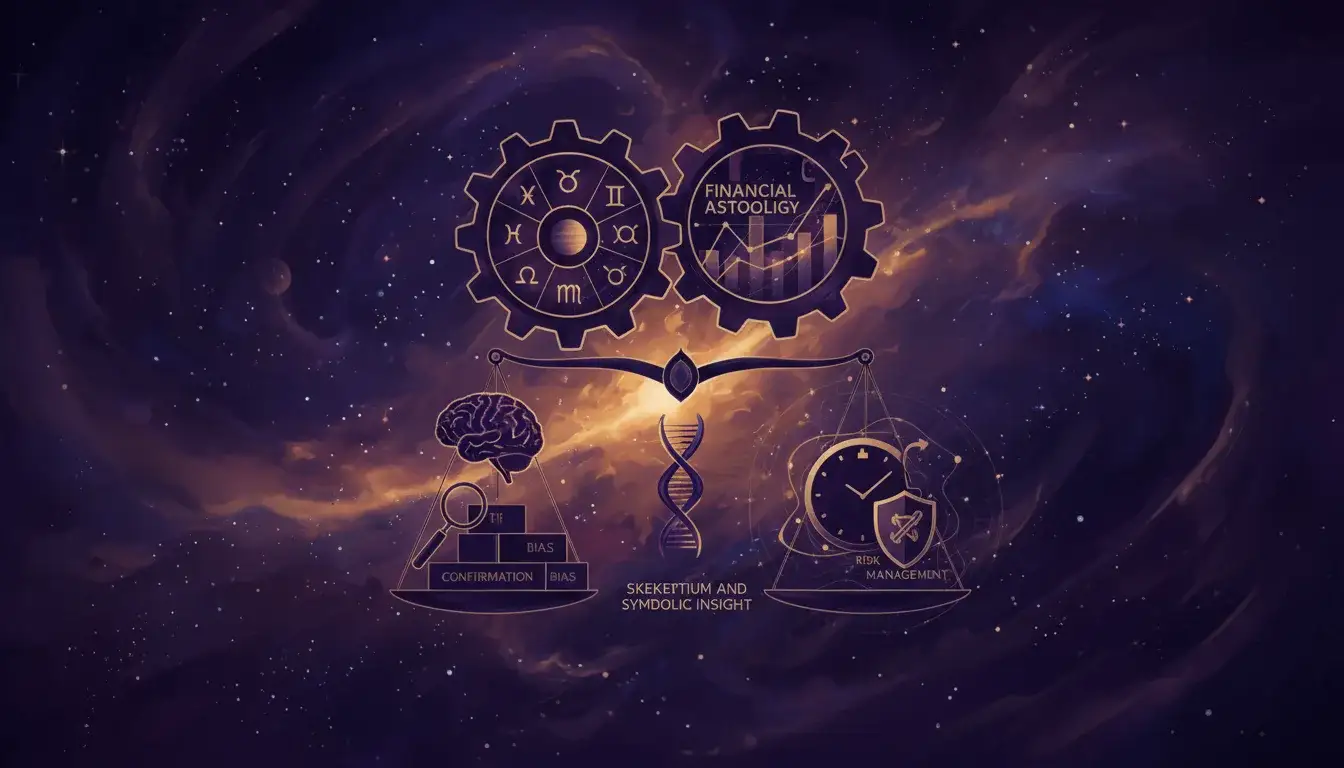
Most academics label financial astrology as pseudoscience. Critics point to confirmation bias and lack of repeatability.
Studies rarely prove statistical significance. However, proponents argue markets are psychological, not purely rational.
Many traders use it not as a crystal ball but as a timing filter. When paired with risk management, it becomes another layer of insight.
Should You Rely on Financial Astrology?
It can't replace solid fundamentals or technicals. But for those who see markets as cyclical and emotional, it adds value.
Best used to time entries or exits, not to replace core research. Always combine with diversification and stop-losses.
Conclusion: Navigating the Stars and Stocks

Financial astrology isn't magic. It's a way of observing market cycles through a symbolic lens.
Whether seen as myth or method, it continues to shape how some interpret economic tides. At minimum, it shows how deeply human behavior and symbolism are intertwined.