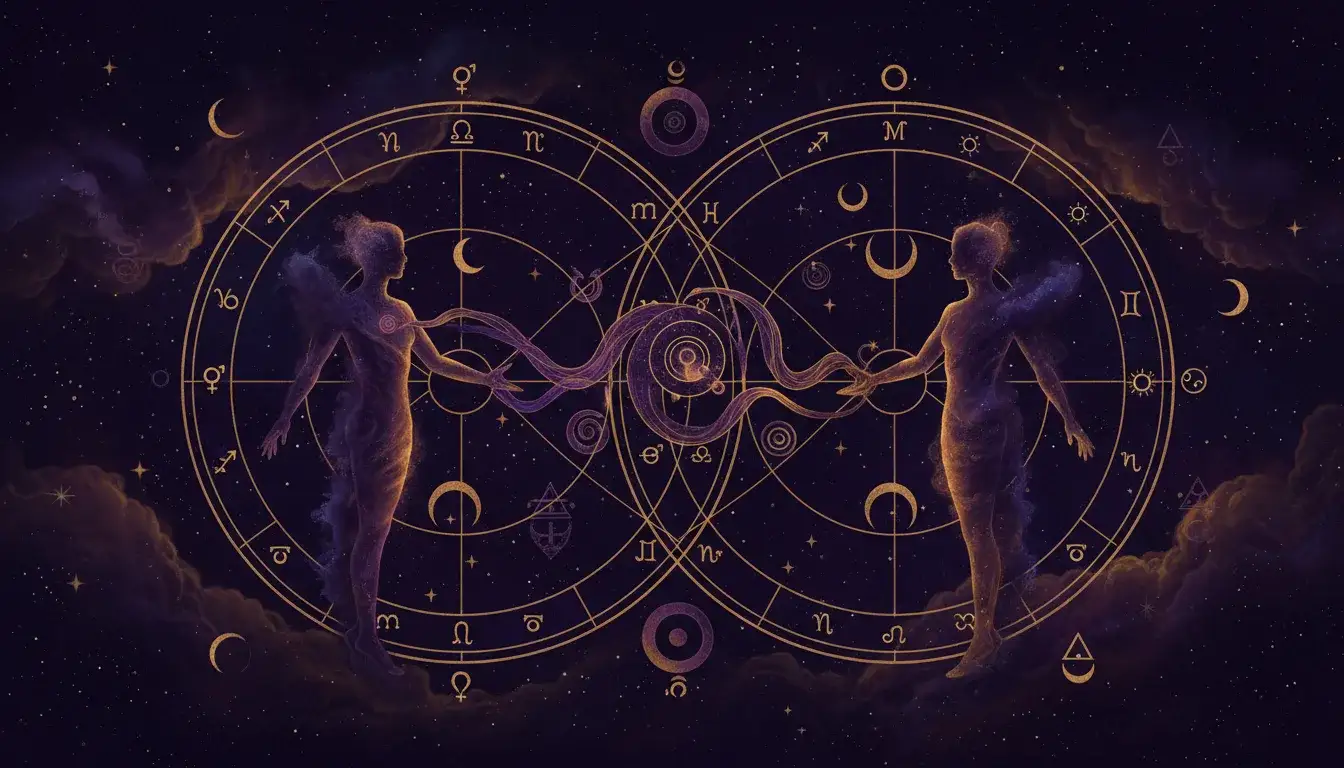
Synastry astrology studies how two birth charts interact. It's used to explore relationship dynamics between partners, friends, or even coworkers.
This practice looks at how the planets in one chart relate to those in another. Unlike general zodiac compatibility, synastry builds on personal planetary placements, not just sun signs.
How Synastry Works
Synastry involves comparing two natal charts side by side. An astrologer overlays one chart on top of the other to identify planetary aspects and house placements.
These alignments reveal where connection flows naturally and where tension may arise. Exact birth times, dates, and locations are required for accurate results.
Online tools can automate this process. Calculators like Astro-Seek or Prokerala generate charts based on input data.
Key Components of a Synastry Chart

Conjunction (0°)
Fusion of planetary energies

Trine (120°) & Sextile (60°)
Easy and harmonious flow
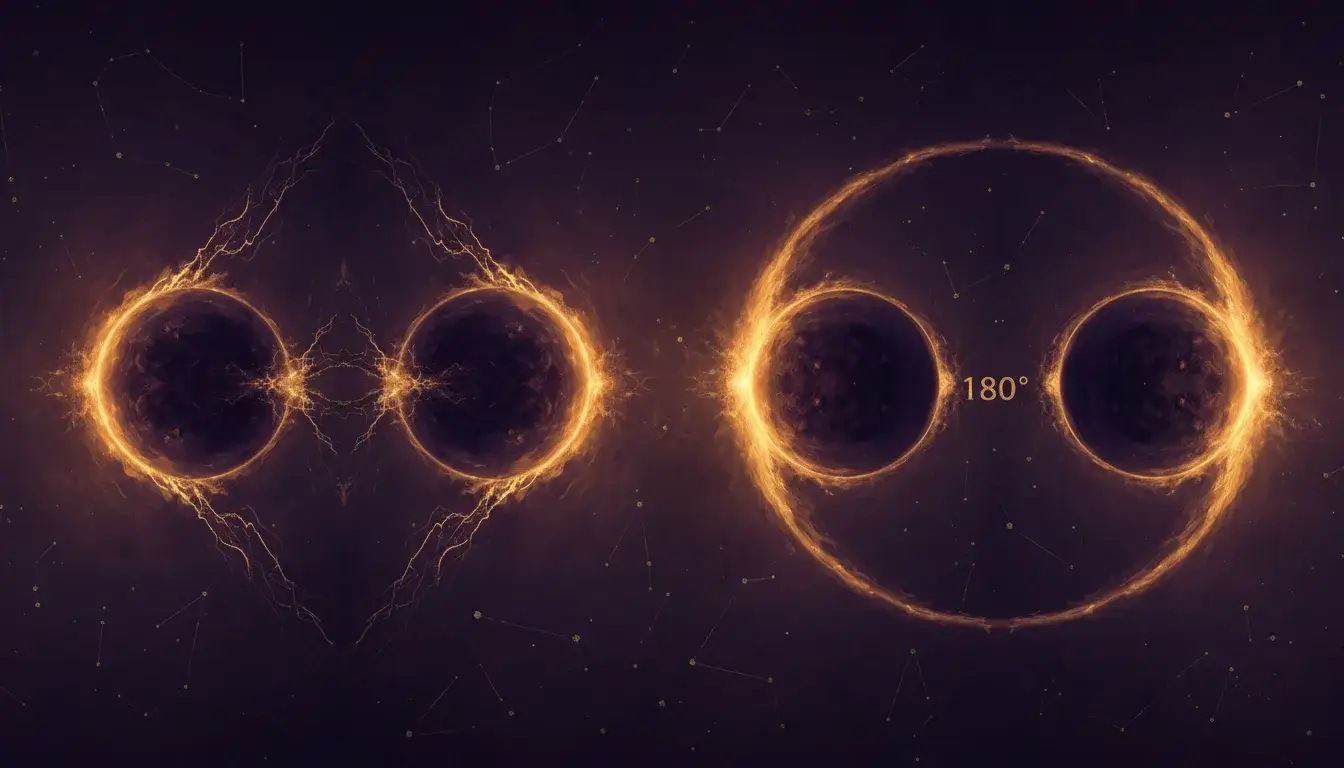
Square (90°) & Opposition (180°)
Tension or conflict

5th & 7th House
Romantic or long-term bonds

10th House
Career-driven connections

12th House
Subconscious or karmic themes
Role of Each Planet in Synastry
Sun and Moon
The Sun relates to self-expression. The Moon represents emotional needs.
Sun-to-Moon aspects suggest whether two people understand and support each other's inner and outer worlds.
Venus and Mars
Venus governs affection and romance. Mars speaks to drive, energy, and sexual chemistry.
When these two planets align positively, attraction feels effortless. Harsh aspects could mean unbalanced desire or friction.
Mercury
Mercury influences how each person thinks and speaks. Compatibility here supports productive dialogue and mutual understanding.
Square or opposition aspects between Mercuries may cause frequent misunderstandings.
Saturn
Saturn aspects point to duty, time, and structure. It can stabilize a connection or impose coldness and pressure.
These alignments often reflect long-term potential, especially if balanced by softer energies.
Jupiter and Outer Planets
Jupiter contributes optimism and shared values. Neptune brings dreams and illusions. Uranus introduces unpredictability, while Pluto adds intensity.
Together, these planets highlight expansion, excitement, and spiritual connection.
Meaning of House Overlays
House overlays help personalize the reading.







Synastry vs Composite Charts
Synastry compares two individuals. Composite charts blend both charts into a single map representing the relationship itself.
Synastry highlights personal influence. Composite shows how the pair functions together as a unit.
Astrologers use both tools, depending on the question or relationship phase.
How Synastry Astrology Is Used
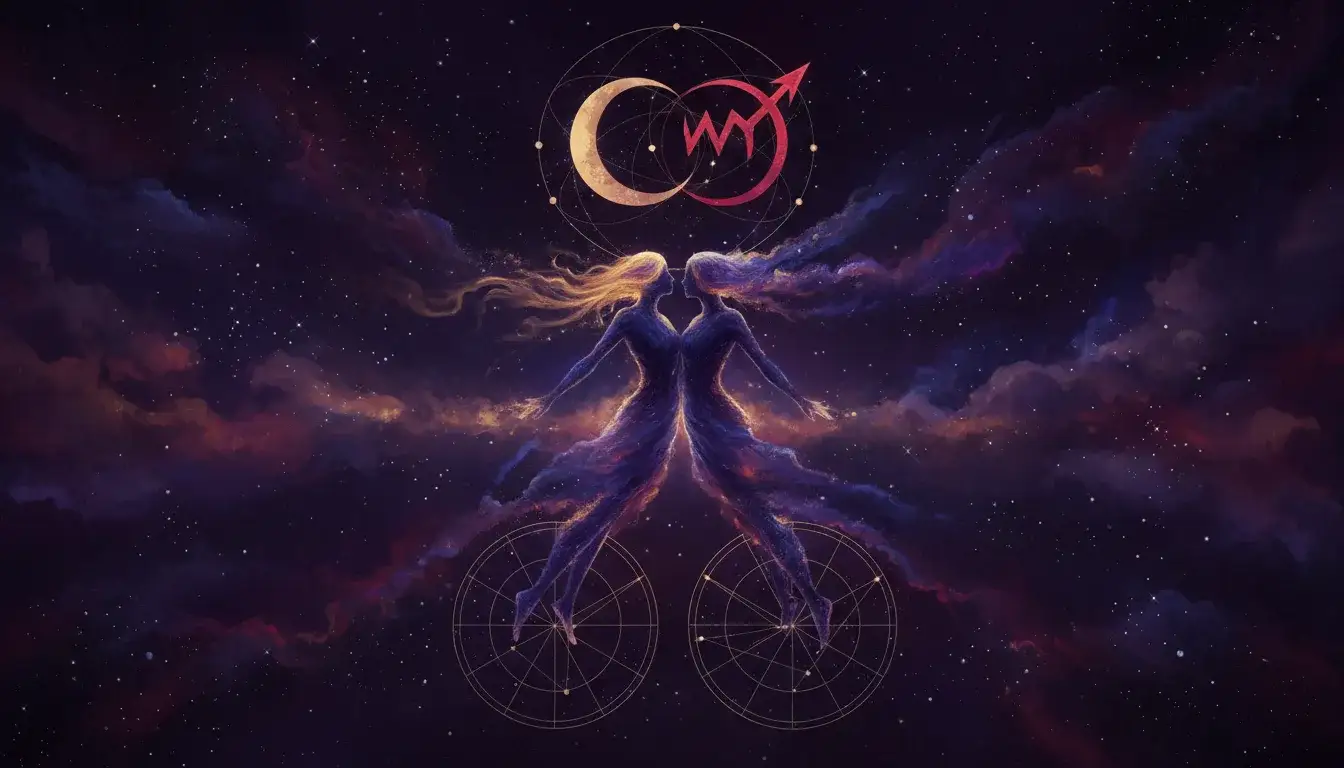
Synastry readings apply across many relationships.
Romantic partnerships

Friendships
Family dynamics
Business collaborations
Therapy and coaching
Common Synastry Patterns in Love
Some chart interactions are frequently found in lasting romantic bonds:

Moon trine Moon
Emotional safety and empathy

Venus conjunct Mars
Physical attraction and passion

Sun conjunct Ascendant
Magnetic first impressions

Saturn trine Venus
Loyalty and support

Mercury sextile Mercury
Compatible thought processes
How to Read a Synastry Chart
Sun, Moon & Ascendant
Core identity interactions

Venus and Mars aspects
Attraction and drive
House overlays
Where partners influence each other

Saturn connections
Structure and longevity

Mercury and outer planets
Communication and depth
Limitations and Ethical Boundaries
Astrology can offer insight, but it's not predictive. People still have free will.
Interpreting synastry requires care. Misuse may reinforce bias or cause anxiety.
Consent matters — always get permission before analyzing someone else's chart.
Synastry in Pop Culture and Modern Life
Astrological dating tools are now part of mainstream apps. Social media often uses synastry to rate celebrity couples.
More people turn to astrology as a relationship lens — especially Gen Z and millennials.
Still, expert readings remain more nuanced than algorithmic ones.
Final Thoughts
Synastry astrology is a layered, powerful approach to understanding relationship dynamics. It explores connection through emotional, mental, and physical layers.
It doesn't dictate outcomes but helps people grow closer — or recognize distance — with more clarity and compassion.