Astrology isn't just about signs and planets—it also involves 12 distinct areas of life called houses. These houses structure a birth chart and reveal how different life themes unfold.
Each house corresponds to a specific area like relationships, money, career, or home. Their meaning changes depending on the planets that fall within them and the signs ruling them.
What Are the 12 Houses in Astrology?
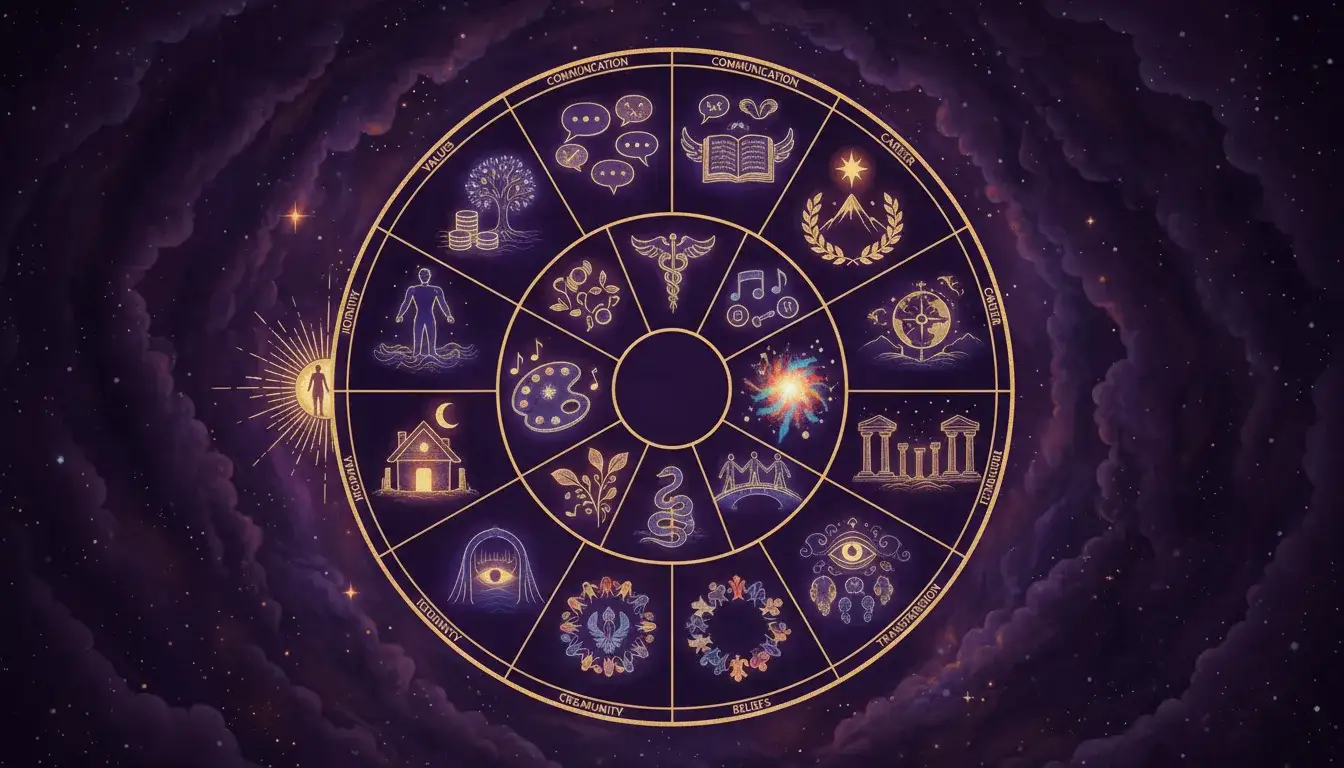
Houses represent environments or situations in life, unlike signs, which reflect personality traits. They act like a stage, showing where events happen.
The entire birth chart is a 360° circle divided into 12 sections. These houses rotate every day, which is why time and location of birth are crucial in chart calculation.
How the 12 Houses Are Calculated in a Birth Chart
The starting point is the Ascendant—also called the Rising Sign. It marks the cusp of the first house and sets the layout for the rest.
Different house systems exist for dividing the chart: Placidus, Whole Sign, Equal House, Koch. Each system splits the circle differently, affecting house size and boundaries.
Once the chart is divided, each house is read through its ruling sign and any planets within it. Explore house interpretations to understand how planets modify the meaning of each life area.
Overview of the 12 Houses: Keywords and Life Areas
Here's a summary of each house and the themes it governs:
The First House – House of Self
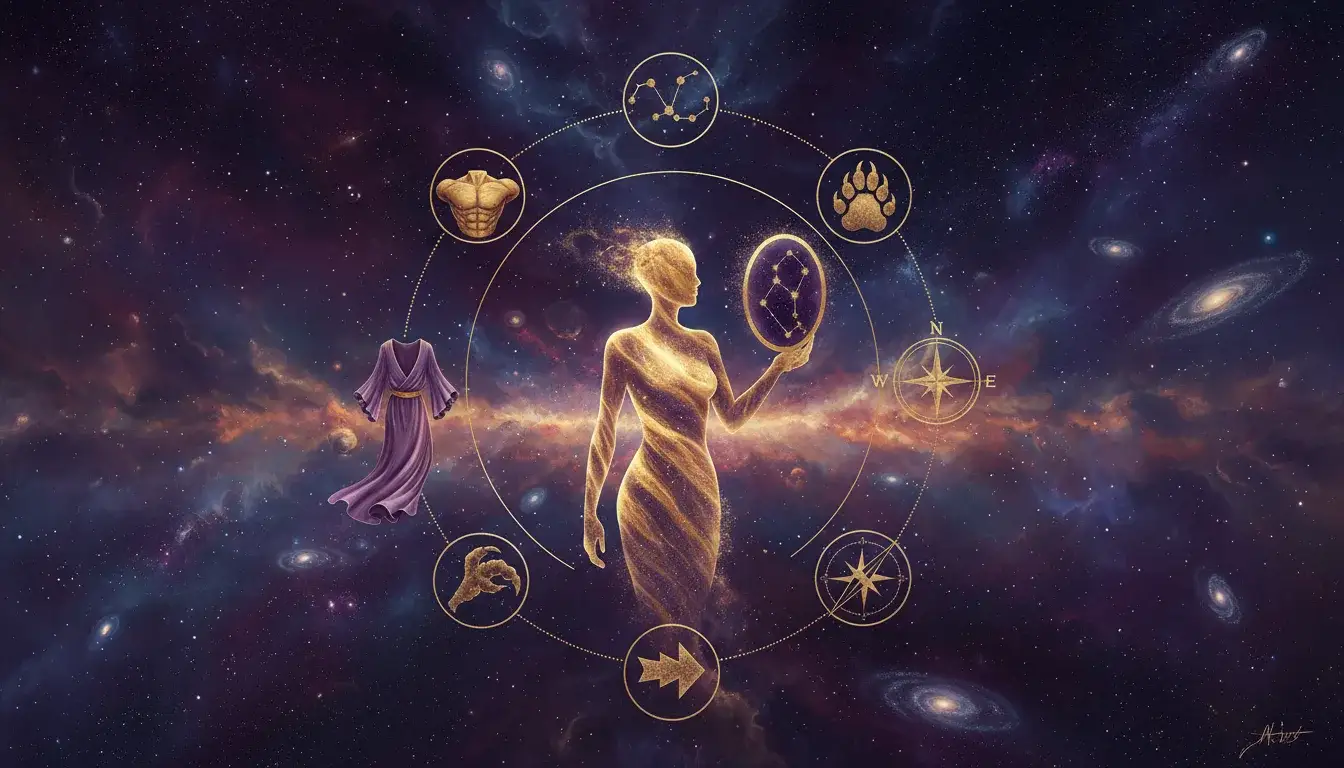
The first house rules your physical body and how others perceive you. It reflects your personal style, instincts, and how you face life.
Planets here strongly shape your identity. If Mars is here, you might appear assertive or bold. With Neptune, you may seem dreamy or hard to read.
The Second House – House of Values and Finances

This house relates to income, assets, and how you define security. It also reflects your priorities and relationship with material goods.
A strong second house might indicate financial stability or an attachment to possessions. Venus here can show a love for beauty and comfort.
The Third House – House of Communication
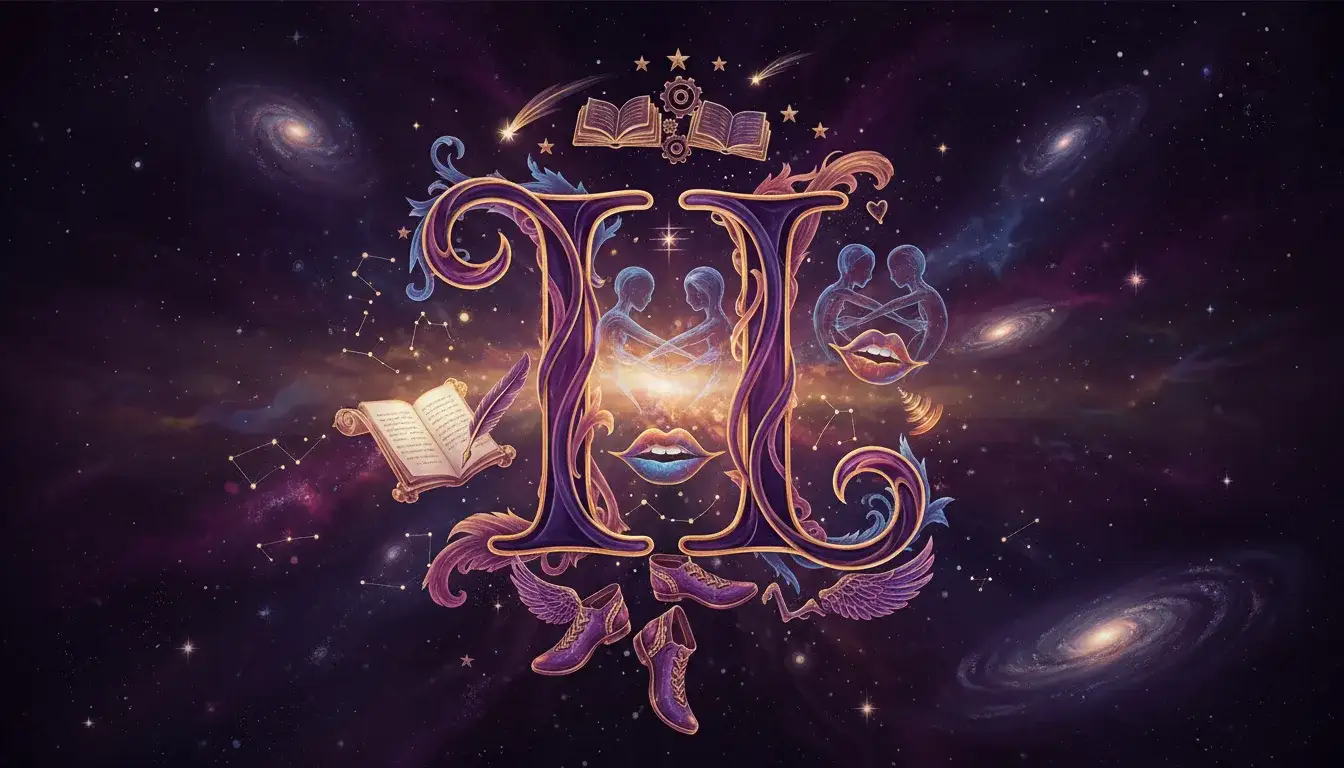
Here lie skills like speaking, writing, and learning. It also includes your relationship with siblings, neighbors, and your local environment.
Mercury thrives in this house. The placement supports mental activity and curiosity. Jupiter could indicate a love for teaching or traveling locally.
The Fourth House – House of Home and Roots
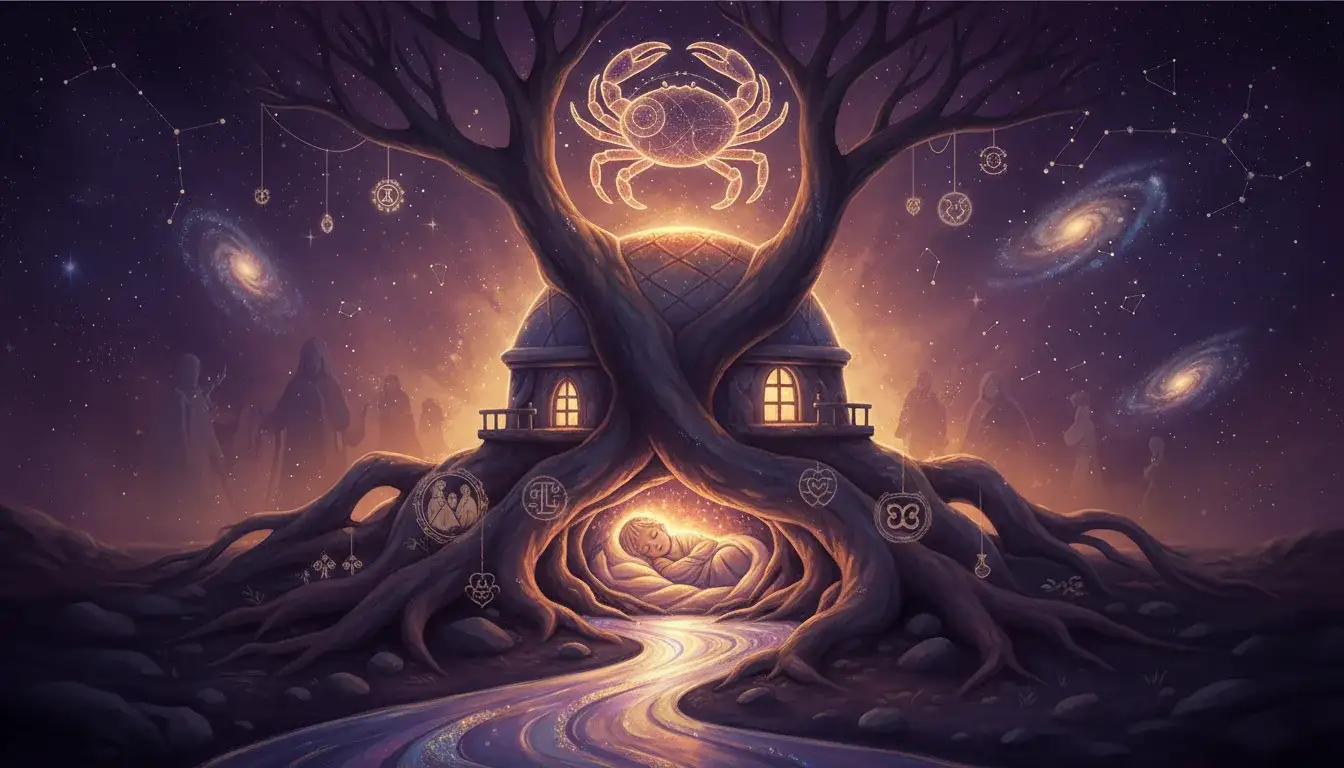
This house is linked to family, ancestry, and emotional foundations. It also governs your living space and connection to childhood.
Planets here often reveal family dynamics. The Moon may indicate emotional ties to home. Saturn could suggest early responsibilities or a strict upbringing.
The Fifth House – House of Creativity and Pleasure

This domain rules children, love affairs, artistic talent, and fun. It's where self-expression and joy come through.
A busy fifth house might indicate talents in drama or visual arts. The Sun shines here, giving confidence and charm. Pluto may bring intensity in romance.
The Sixth House – House of Work and Health
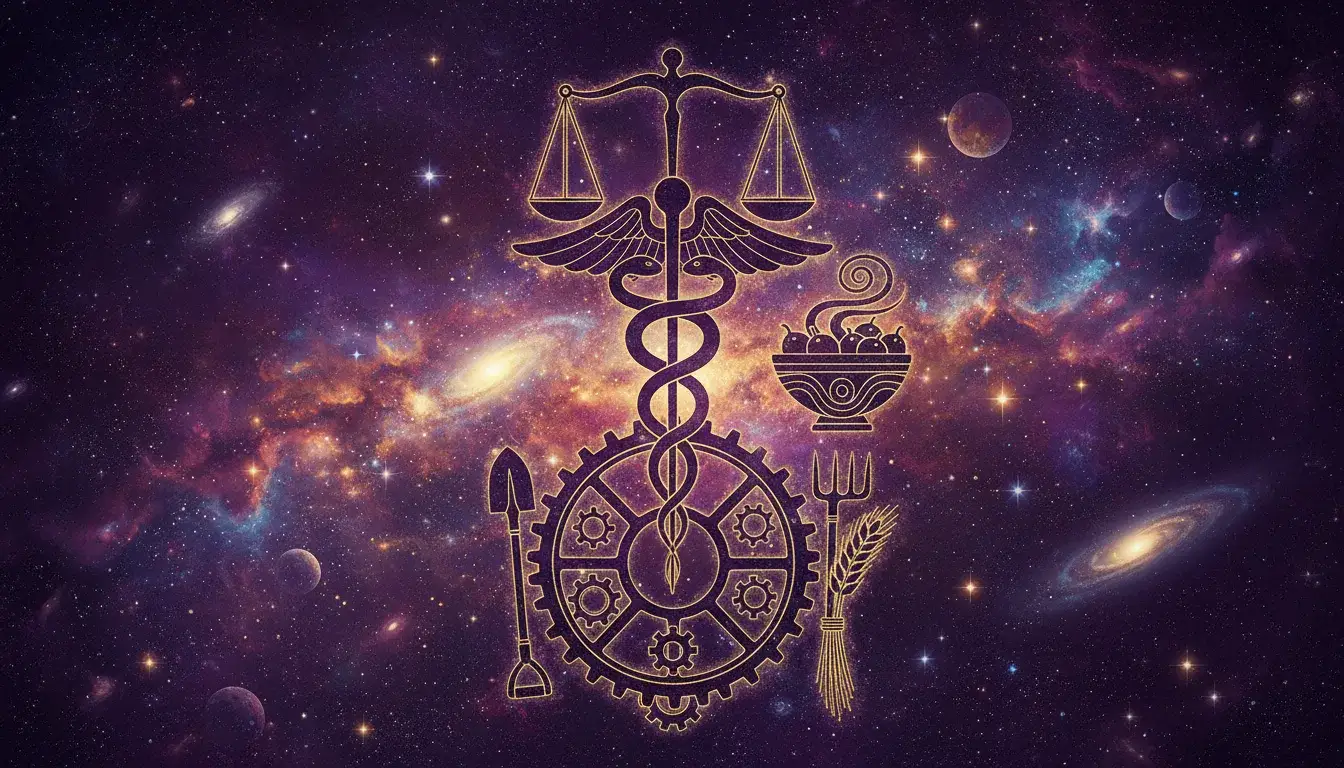
This house highlights day-to-day life: your job, habits, diet, and overall health. It also points to your relationship with duty and discipline.
Planets here affect physical well-being and how you manage routine. Mars brings energy but may signal burnout. Chiron could show areas of healing through service.
The Seventh House – House of Partnerships
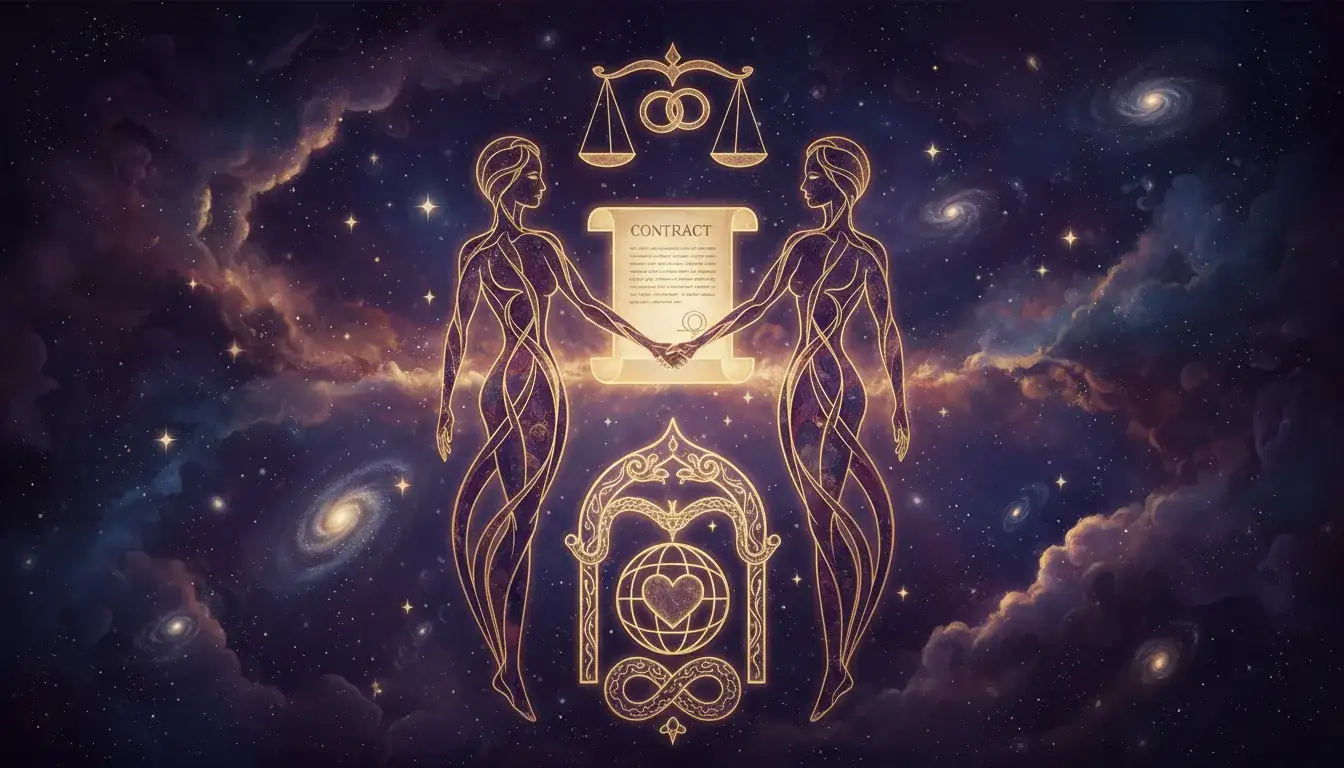
Opposite the first house, this sector governs committed relationships. It includes marriage, contracts, and all one-on-one dynamics.
With Venus here, you may seek harmony in partnerships. Uranus may bring unconventional or unpredictable connections.
The Eighth House – House of Transformation

Often misunderstood, this house deals with shared finances, sex, death, and rebirth. It's the place of deep psychological change.
It reflects how you handle loss, intimacy, and joint assets. Jupiter may bring inheritance or wisdom through crisis. Saturn can cause restriction or karmic bonds.
The Ninth House – House of Higher Learning and Travel

This house rules education beyond high school, foreign travel, belief systems, and law. It expands your horizon—literally and metaphorically.
A strong ninth house often points to global curiosity or religious exploration. Neptune can create idealism. Mercury sharpens philosophical thinking.
The Tenth House – House of Career and Reputation

Sitting at the top of the chart, this house represents your public face. It includes achievements, professional roles, and how society views you.
The Midheaven (MC) usually falls here. Mars pushes toward leadership. Venus may signal careers in beauty, art, or diplomacy.
The Eleventh House – House of Community and Dreams
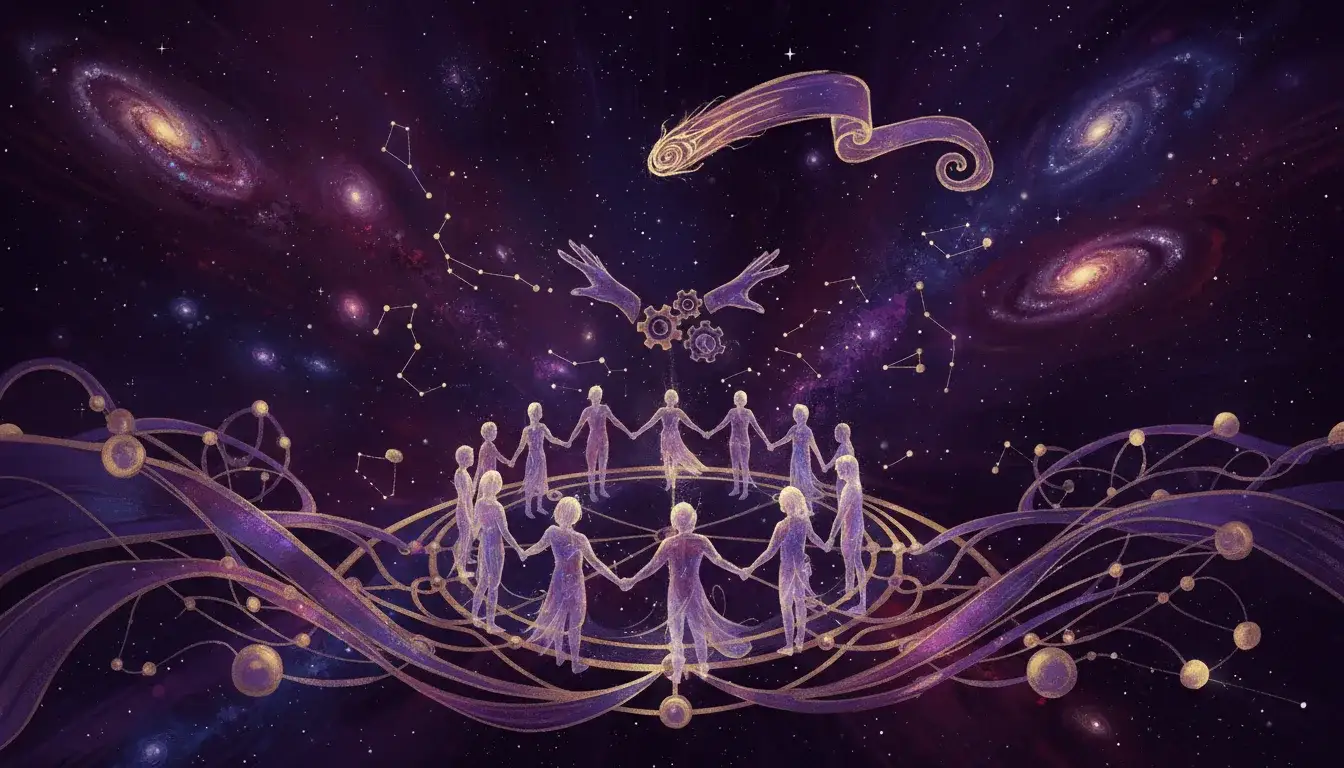
Here live your friendships, networks, and social ideals. It also covers long-term goals and causes you support.
Planets in the eleventh house reflect how you connect with groups. Uranus rules here naturally. The Moon brings emotional investment in collective efforts.
The Twelfth House – House of the Subconscious
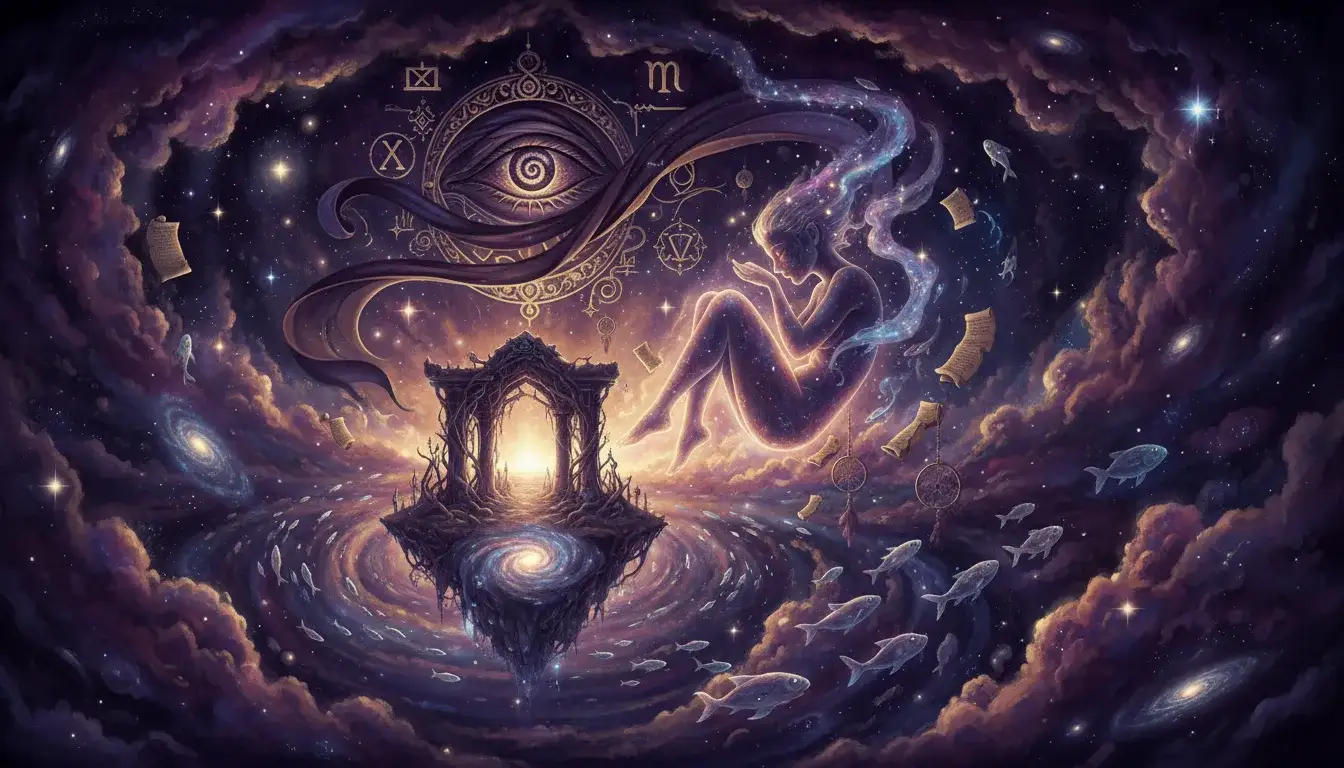
This is the most hidden area of the chart. It governs spirituality, isolation, dreams, and things you hide from yourself or others.
People with many planets here often need solitude. Neptune enhances intuition. Saturn can bring isolation but also spiritual discipline.
Angular, Succedent, and Cadent Houses
Houses divide into three groups by quality:

Angular
Houses 1, 4, 7, 10: action and initiation

Succedent
Houses 2, 5, 8, 11: stability and accumulation

Cadent
Houses 3, 6, 9, 12: movement and transition
This division affects how house themes express themselves in life.
Natural House Rulership – Signs and Their Houses
Each sign naturally aligns with a house:
| Sign | House |
|---|---|
 Aries Aries | 1st House |
 Taurus Taurus | 2nd House |
 Gemini Gemini | 3rd House |
 Cancer Cancer | 4th House |
 Leo Leo | 5th House |
 Virgo Virgo | 6th House |
 Libra Libra | 7th House |
 Scorpio Scorpio | 8th House |
 Sagittarius Sagittarius | 9th House |
 Capricorn Capricorn | 10th House |
 Aquarius Aquarius | 11th House |
 Pisces Pisces | 12th House |
| Sign | House | Sign | House |
|---|---|---|---|
| Aries | 1st House | Libra | 7th House |
| Taurus | 2nd House | Scorpio | 8th House |
| Gemini | 3rd House | Sagittarius | 9th House |
| Cancer | 4th House | Capricorn | 10th House |
| Leo | 5th House | Aquarius | 11th House |
| Virgo | 6th House | Pisces | 12th House |
House Emphasis and Empty Houses
Not every house will contain planets. An empty house still matters—it just functions without a planet highlighting it.
When several planets cluster in a house, that area becomes dominant. For example, a loaded sixth house points to routine-heavy life and health themes.
Transits and Progressions Through the Houses
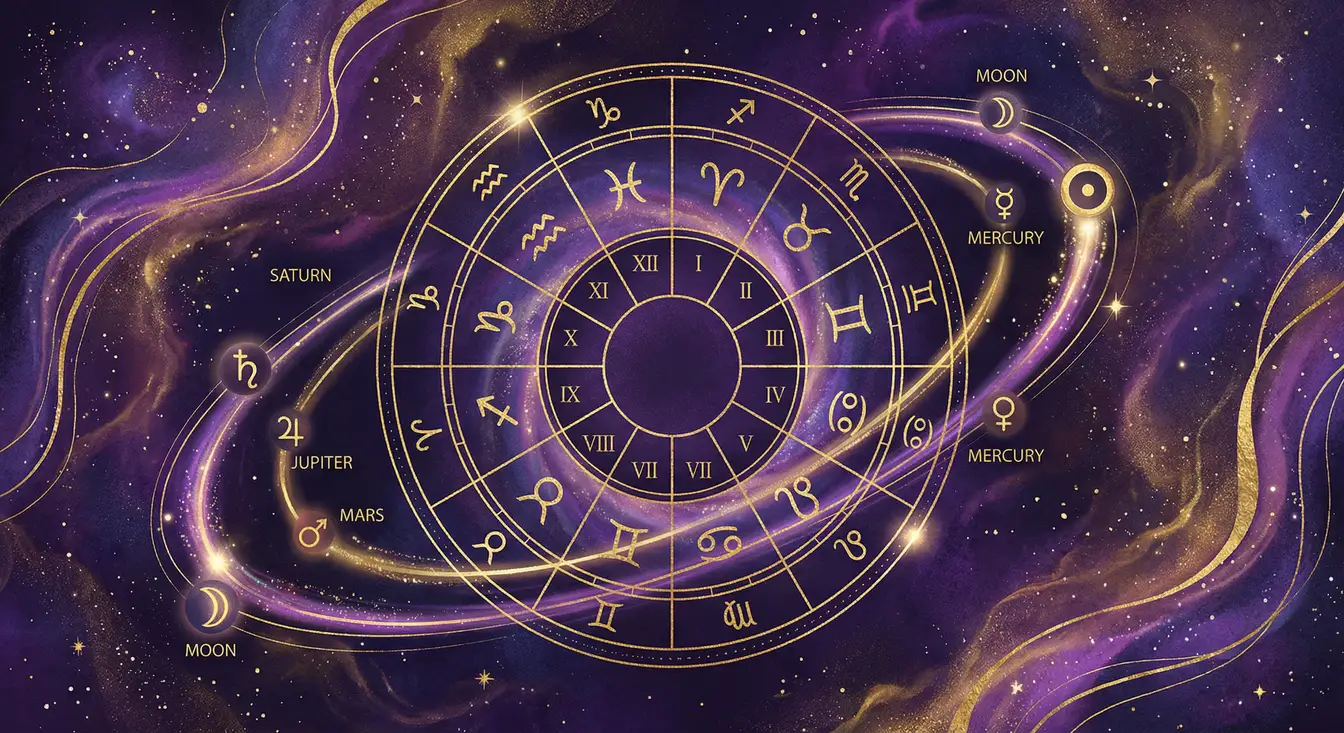
As planets move, they pass through different houses. Each transit activates specific life themes.
Saturn in the seventh may test relationships. Jupiter in the tenth can bring career growth. Progressions also shift emphasis in more subtle, long-term ways.
The 12 Houses in Vedic Astrology
In Vedic astrology, houses are called bhavas. They align with broader life goals like:
Dharma (purpose)
Houses 1, 5, 9
Artha (resources)
Houses 2, 6, 10

Kama (desire)
Houses 3, 7, 11

Moksha (liberation)
Houses 4, 8, 12
Summary – Why the Houses Matter
The 12 houses form the map of your life experiences. They show where energy flows, challenges arise, and growth happens.
Understanding house placement gives insight into your emotional, practical, and spiritual path. They help turn astrology into a guide for real life.