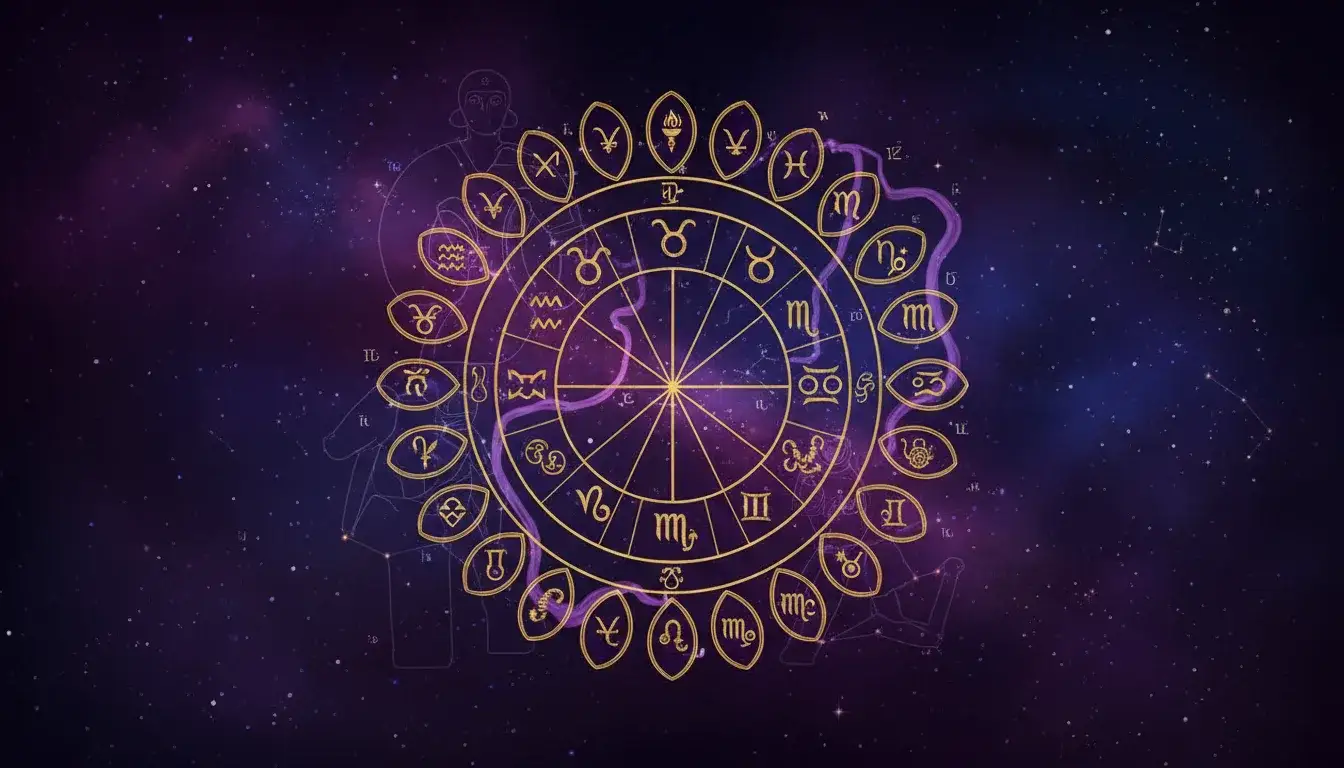
Vedic astrology is an ancient system of celestial interpretation rooted in the traditions of India. Known as Jyotish in Sanskrit, it translates as the "science of light."
This system links planetary movement with human life. It maps a person's karmic imprint using a birth chart based on the time and place of birth.
Origins and History of Vedic Astrology
Jyotish has its foundation in the Vedas, particularly in the Rigveda and Atharvaveda. These texts, dating back several thousand years, reference the stars and their role in human affairs.
Later, this oral wisdom was compiled in classical treatises like the Brihat Parashara Hora Shastra. Ancient sages transmitted these teachings through lineages of astrologer-priests.
Vedic astrology was never separated from spiritual practice. It existed alongside Ayurveda, yoga, and ritual systems as part of a unified knowledge tradition.
Philosophical Foundation of Vedic Astrology
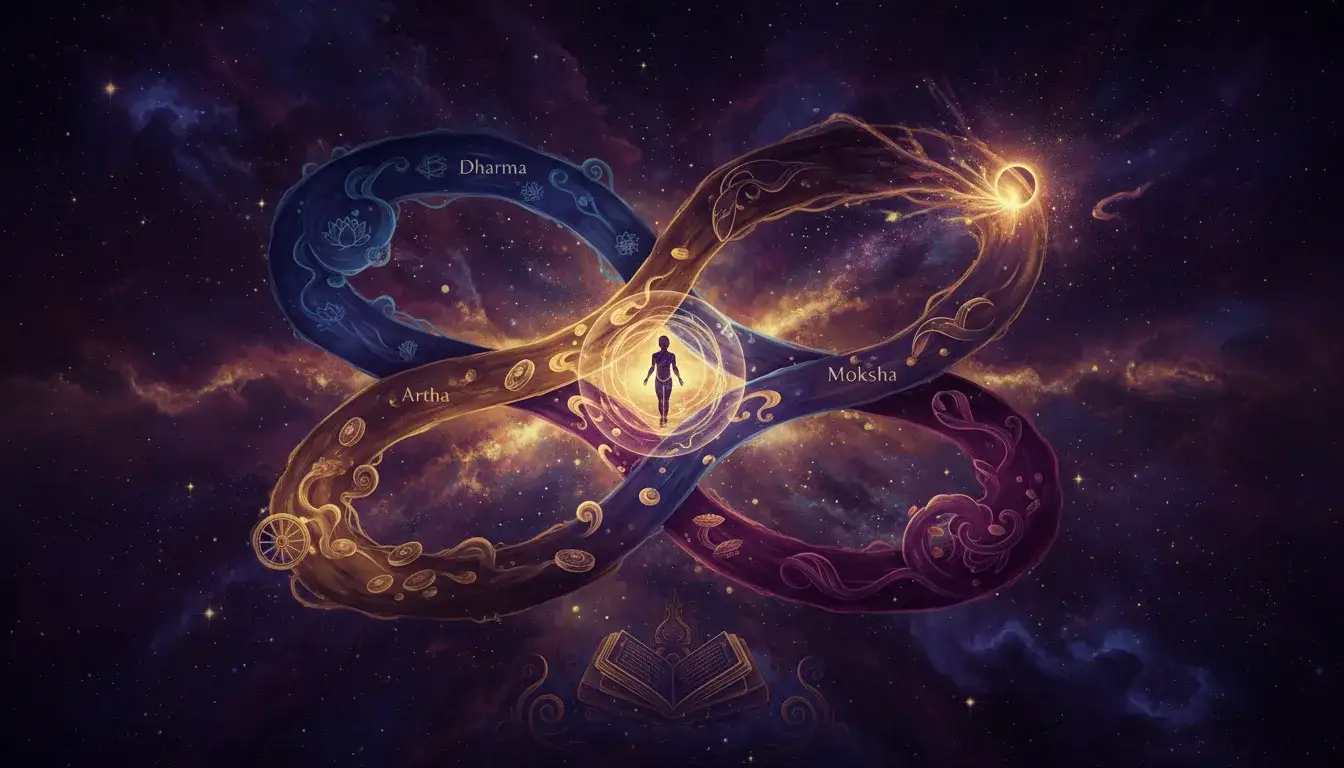
Vedic astrology operates on a karmic framework. A person's birth chart reflects previous actions and their influence on current experiences.
The core idea is that each soul follows a journey of learning through cycles of birth and rebirth. Jyotish helps map that journey.
It also aligns with four life aims: dharma (purpose), artha (resources), kama (desire), and moksha (liberation). The chart shows which path is dominant or in conflict.
This makes astrology not just predictive but also diagnostic. It gives insight into character, tendencies, and timing.
Sidereal Zodiac vs Tropical Zodiac — Key Differences
Unlike Western astrology, Jyotish uses the sidereal zodiac. This system tracks the actual position of constellations in the sky.
In contrast, the tropical zodiac used in the West aligns signs with the seasons. Over centuries, it has shifted from the stars by nearly 24 degrees.
Because of this, many people find that their Vedic zodiac sign differs from their Western one. An Aries in Western astrology might be Pisces in Jyotish.
Another major distinction is focus. Vedic astrology centers on the Moon sign, not the Sun. The Moon governs emotions, mind, and daily rhythms.
Core Components of a Vedic Astrology Chart
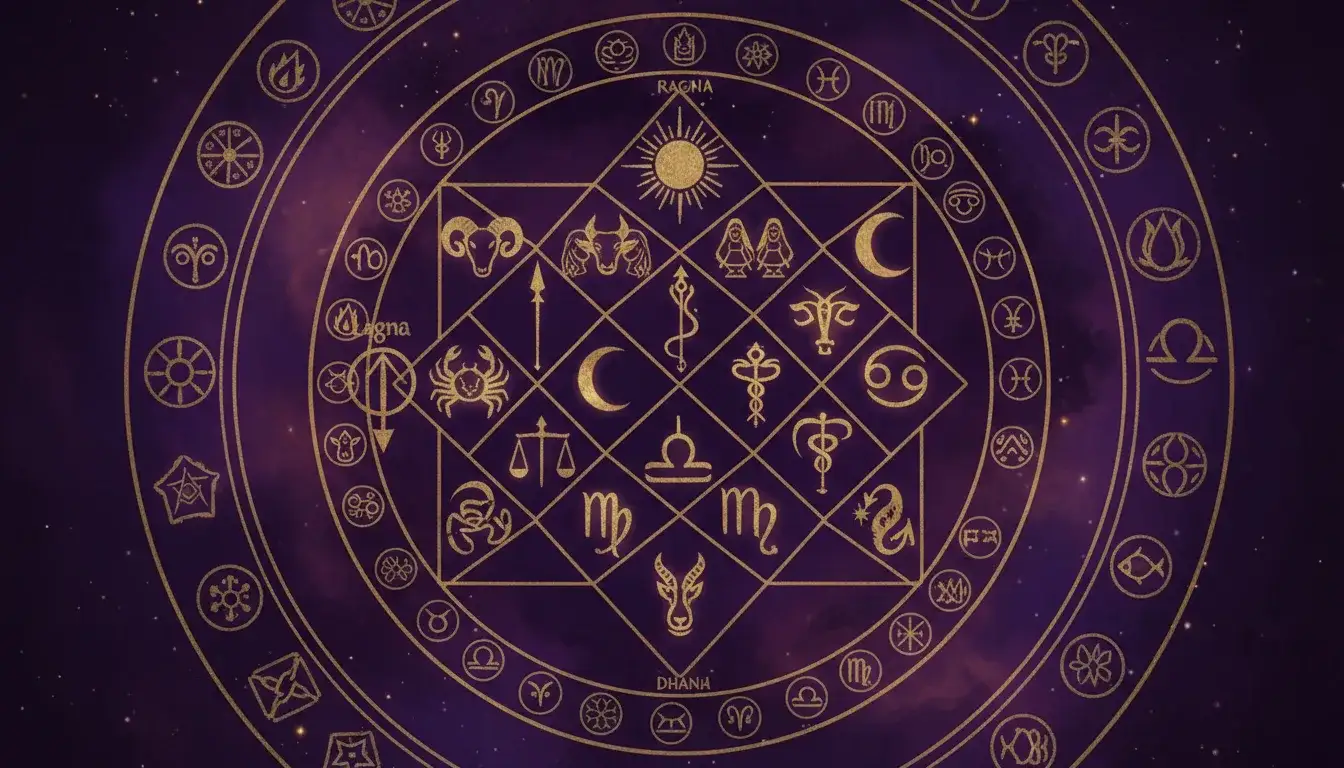
Each birth chart in Jyotish includes multiple layers. The system combines signs, planets, houses, and lunar segments to create a full profile.
The 12 Zodiac Signs (Rashis)
The signs are the same by name as in Western astrology — Aries (Mesha) to Pisces (Meena). But their meanings are interpreted through the sidereal framework.
Each sign has ruling planets, elemental qualities, and symbolic traits. Their placement in a chart reflects behavioral tendencies and life themes.
The 9 Planets (Grahas)
There are seven visible planets and two invisible forces — Rahu and Ketu. The list includes:
Rahu and Ketu are mathematical points where eclipses occur. They symbolize karma, transformation, and psychological patterns.
The 12 Houses (Bhavas)
Houses correspond to different areas of life: body, income, family, relationships, career, and more. Their sequence follows the Ascendant sign.
For example, the 7th house relates to marriage and partnerships. The 10th speaks to career and reputation.
Planets in each house modify how those areas unfold. Some bring tension, others stability.
The 27 Nakshatras (Lunar Mansions)
Nakshatras divide the lunar path into 27 equal segments. Each has its own deity, symbolism, and personality profile.
They are central in timing rituals, understanding inner drives, and refining chart analysis.
Nakshatras like Rohini, Ashwini, or Magha add nuance. Two people with the same Moon sign may differ strongly due to their nakshatra.
The Ascendant (Lagna)
The Ascendant is the sign rising on the eastern horizon at birth. It defines how one appears to others and initiates action.
It also sets the starting point for chart houses. A change in birth time can shift the Ascendant, altering the whole chart.
Planetary Periods and Timing — The Dasha System
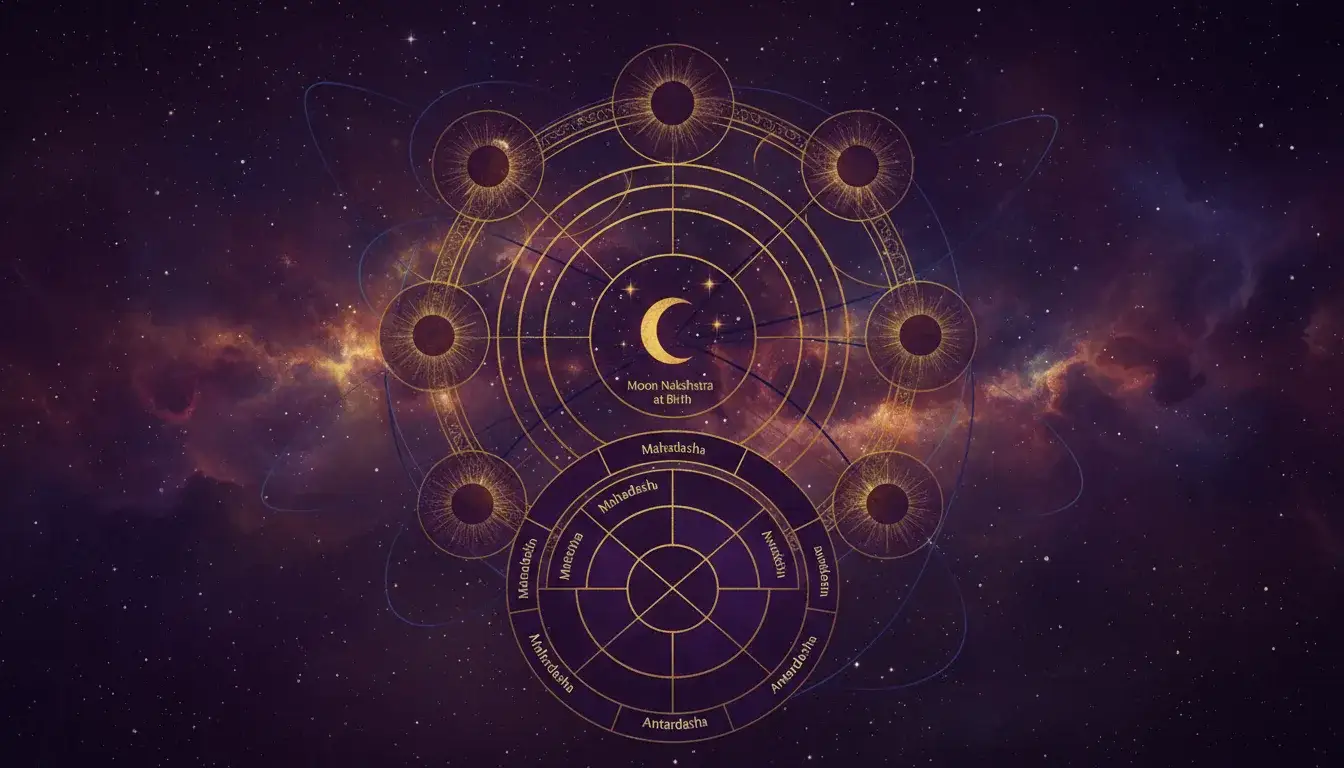
Dashas divide a life into planetary periods. Each period shows which planet is "active" and shaping events.
The Vimshottari Dasha system is most widely used. It begins from the Moon's nakshatra at birth.
Each major period (mahadasha) lasts between 6 and 20 years. These are further broken into sub-periods (antardasha), adding layers of detail.
This system helps explain why two people with similar charts may have different life trajectories. Timing changes everything.
Key Branches of Vedic Astrology
Vedic astrology contains multiple specialized branches. Each has a specific focus and method.
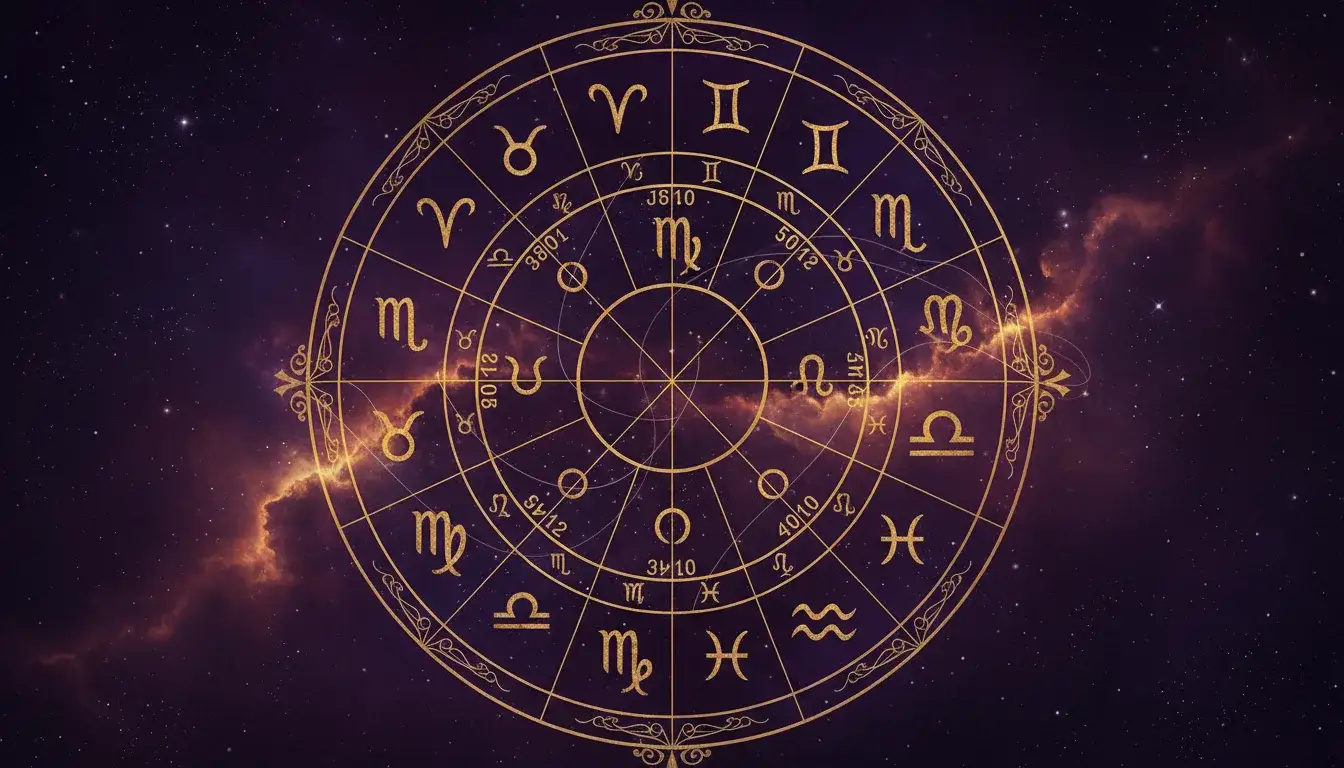
Natal astrology (Hora Shastra)
Interprets the birth chart to understand life's blueprint
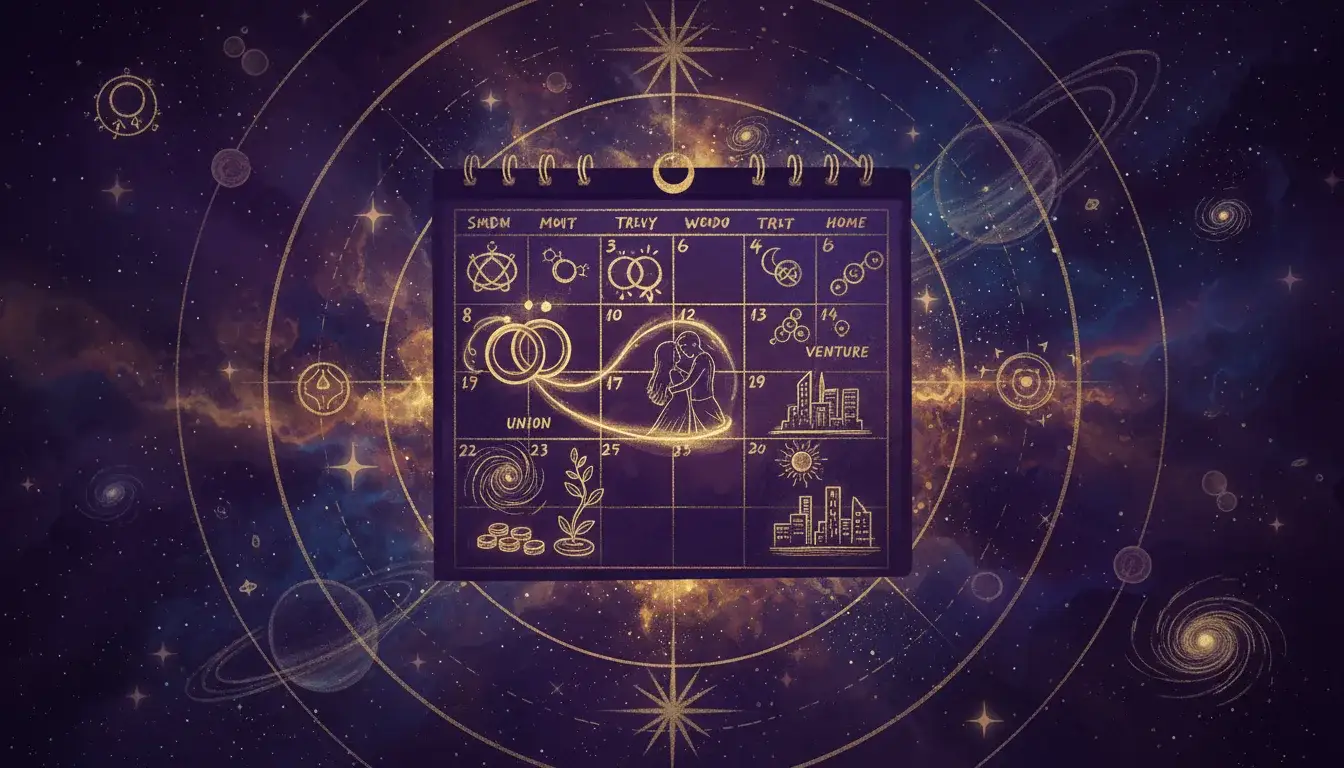
Muhurta
Helps pick the best time for new beginnings — weddings, business launches, surgeries
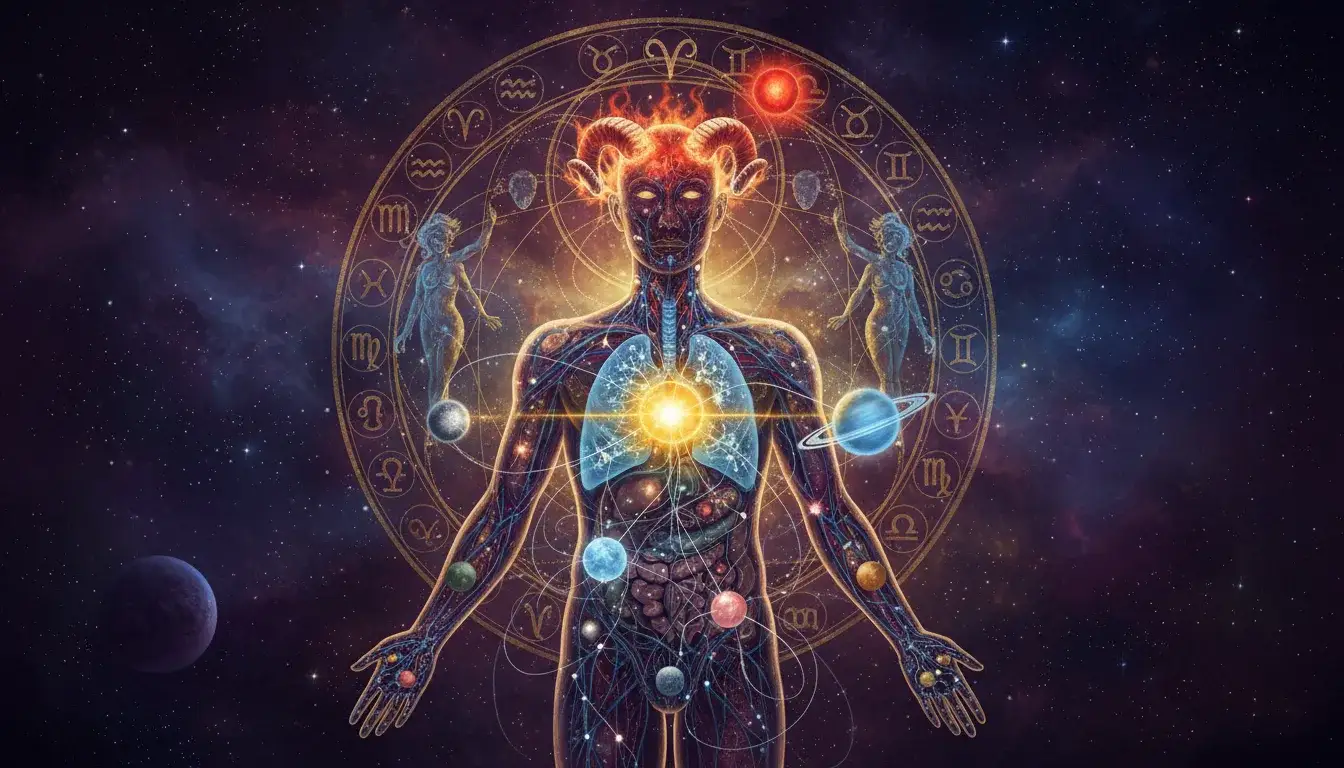
Medical astrology
Links planetary placements with health, doshas, and disease risk
Predictive astrology
Uses transits and dashas to forecast events
Kundli Milan (compatibility)
Assesses long-term relationship potential through chart matching
Each branch has its own logic. Some focus on fixed birth factors, others on timing and cycles.
How to Read a Vedic Chart — A Beginner's Guide
Creating a Vedic chart requires accurate birth time, date, and location. A small difference can shift the Lagna or Moon sign.
Charts are usually drawn in North or South Indian format. Both show the same data but visualize house positions differently.
Key points to find:
Modern software helps calculate charts, but interpretation still depends on experience.
Vedic vs Western Astrology — What Makes Jyotish Unique?
The two systems differ in technique and outlook. Vedic astrology is more predictive, Western more psychological.
Vedic charts use sidereal calculations and emphasize karmic themes. Western charts emphasize personality and archetypes.
Jyotish also includes planetary remedies — mantras, gemstones, rituals — meant to harmonize planetary influence.
Western astrology rarely includes direct prescriptions.
Practical Uses of Vedic Astrology in Daily Life
Many people consult Jyotish to clarify their path. Common applications include:
By studying transits and dashas, people can better prepare for change or difficulty.
Misconceptions and Myths about Vedic Astrology
Vedic astrology is often misunderstood as fortune-telling or superstition. In reality, it's a symbolic language with deep structure.
It does not negate free will. Instead, it shows the terrain — the choices still belong to the person.
It's also not limited to one culture or religion. Anyone can benefit from understanding their chart.
How to Learn Vedic Astrology — Paths and Resources
Learning Jyotish takes time and dedication. Some start with books like Light on Life by Hart de Fouw or Beneath a Vedic Sky by William Levacy.
Others join online courses or study under mentors. Learning Sanskrit terminology is essential for deeper understanding.
It also helps to explore related fields — mythology, Ayurveda, yoga philosophy — for context.
Final Thoughts — Why Vedic Astrology Still Matters
Jyotish remains relevant because people still seek meaning, timing, and alignment. In chaotic moments, it gives perspective.
Rather than being about fate, it's a mirror. One that helps decode life's cycles and patterns.
It brings together logic and mysticism, time and choice — without losing depth.